Operating by John Brewton | McLean, VA | 2.8.26
Hermès is the clearest modern case of a company that turned its operations into its brand. So you can probably imagine the affinity I have for their work and products.
It manufactures scarcity, not through marketing tricks, but through single-artisan production, controlled capacity expansion, vertical integration, and a relationship-driven allocation system. Then it prices into the demand it creates.
If you want a working definition of luxury strategy, here it is: protect the process, protect the distribution, and let the waitlist do the advertising.
I hope you enjoy this week’s edition of Operating Stories. I have a sincere place in my hear for the company this week.
- john -
What Is Hermès’ Business Model?
Hermès is a craftsmanship-first, vertically integrated luxury house. It sells primarily through its own boutiques, keeps production deliberately below demand, and uses scarcity to maintain pricing power and secondary-market prestige.
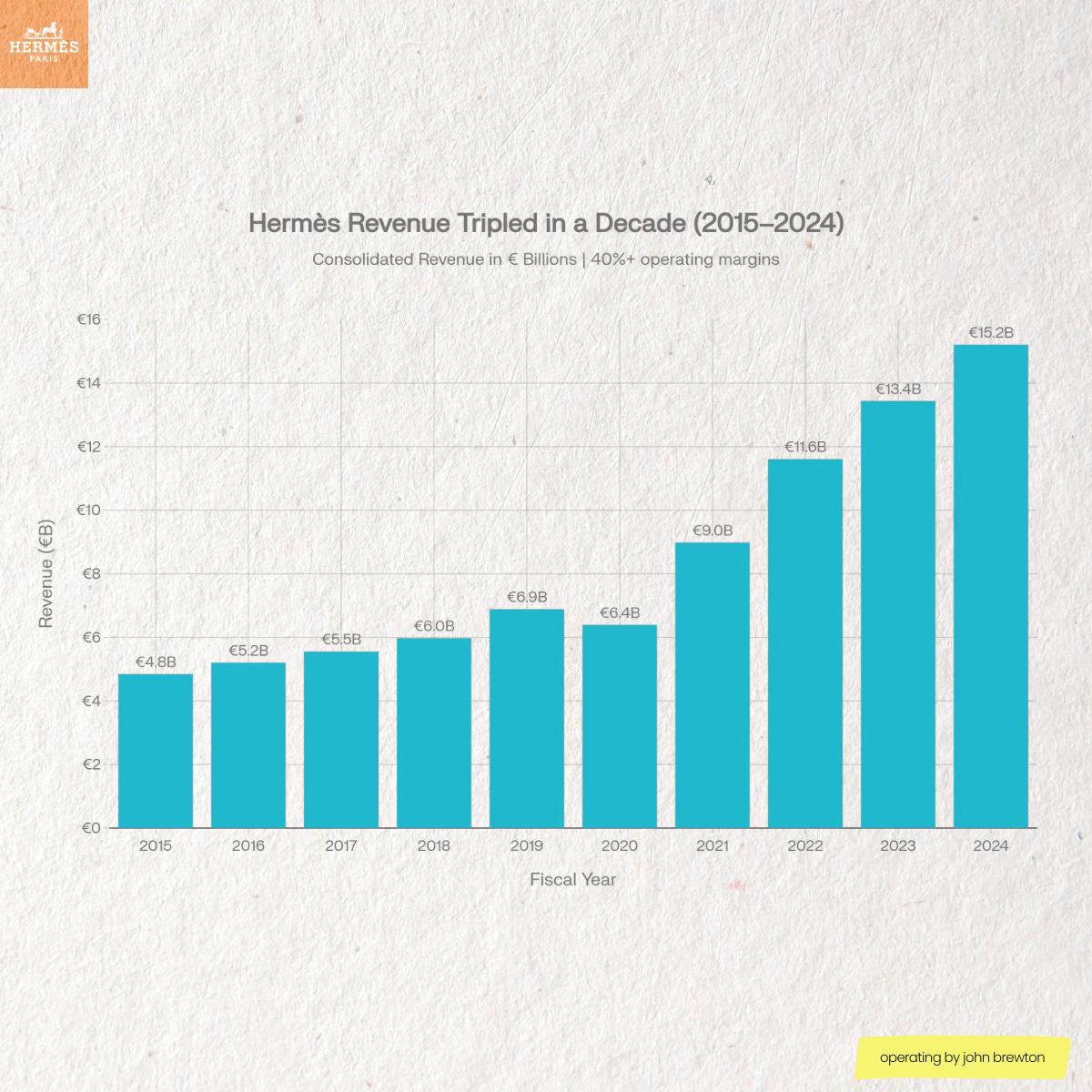
The numbers speak for themselves. In 2024, Hermès generated €15.2 billion in revenue with €4.6 billion in net income and a recurring operating margin around 40.5%. Not too shabby. What is most extraordinary is that it achieves these numbers while actively refuseing to scale in many of the manners their competitor have chosen.