
Operating Stories: Louis Vuitton and the Business of Collaboration
A Weekly Series From Operating by John Brewton Making Business History Actionable for Creators, Founders and Small Business Builders

Are you new to Operating?
You Might Enjoy These
(Access the entire library of articles and resources for $7.99 per month)
0 to 55,000 - The First 90 Days Playbook - What I’d Do Differently Knowing What I Know Now
The Operating by John Brewton Resource Library - No Filler. All Killer.
WINNING THE LOSER’S GAME: The Creator Economy and the Companies We All Need to Build
Become a paid subscriber to access all the content ($7.99 / month) or get to work with us and become a member of the Operating Founder cohort for $99 (annual).
What Creators, Solopreneurs, and Small Firms Can Learn From the House That Turned Collaboration Into a Money Machine
This article is designed to meet you wherever you learn best. Free subscribers get the thesis and the six principles above. Paid subscribers get the full financial analysis, era-by-era breakdown, branded charts, and the LV Collaboration Playbook, plus a downloadable AI Prompt Pack with sixteen structured prompts you can run in ChatGPT, Claude, Gemini, or any AI tool to apply these principles directly to your own business. As an experiment, I've also built a NotebookLM notebook with the full article and all of my underlying research, so you can ask your own questions, generate an audio summary, or go deeper on any section at your own pace (this asset is only able to be accessed by my paid community given sharing restrictions from NotebookLM/Google). Since this is the first time I’m trying this approach, I’m releasing the notebook to all subscribers (future edtions will be solely for my paid audience).
Become a monthly paid subscriber for $7.99 / monthly → $55 / Annually
Start Here
In the last installment of Operating Stories, I wrote about Hermès and the manufacturing of scarcity. My thesis was simple: Hermès builds its entire business model around saying no. No to faster production. No to wider distribution. No to the customer who wants a Birkin but hasn’t earned the relationship.
Louis Vuitton is the inverse.
Where Hermès restricts, Vuitton absorbs and expands into the larger cultural market. Where Hermès guards the gates, Vuitton opens them, selectively, strategically, and on its own terms. For nearly three decades, collaboration has not been a marketing tactic at LV. It has been the operating system. And the numbers prove the system works.
Louis Vuitton is the largest luxury brand on earth. Analysts estimate roughly €22–25 billion in annual revenue. Kantar BrandZ has ranked it the world’s most valuable luxury brand for eighteen consecutive years, with a current valuation of approximately $130 billion.
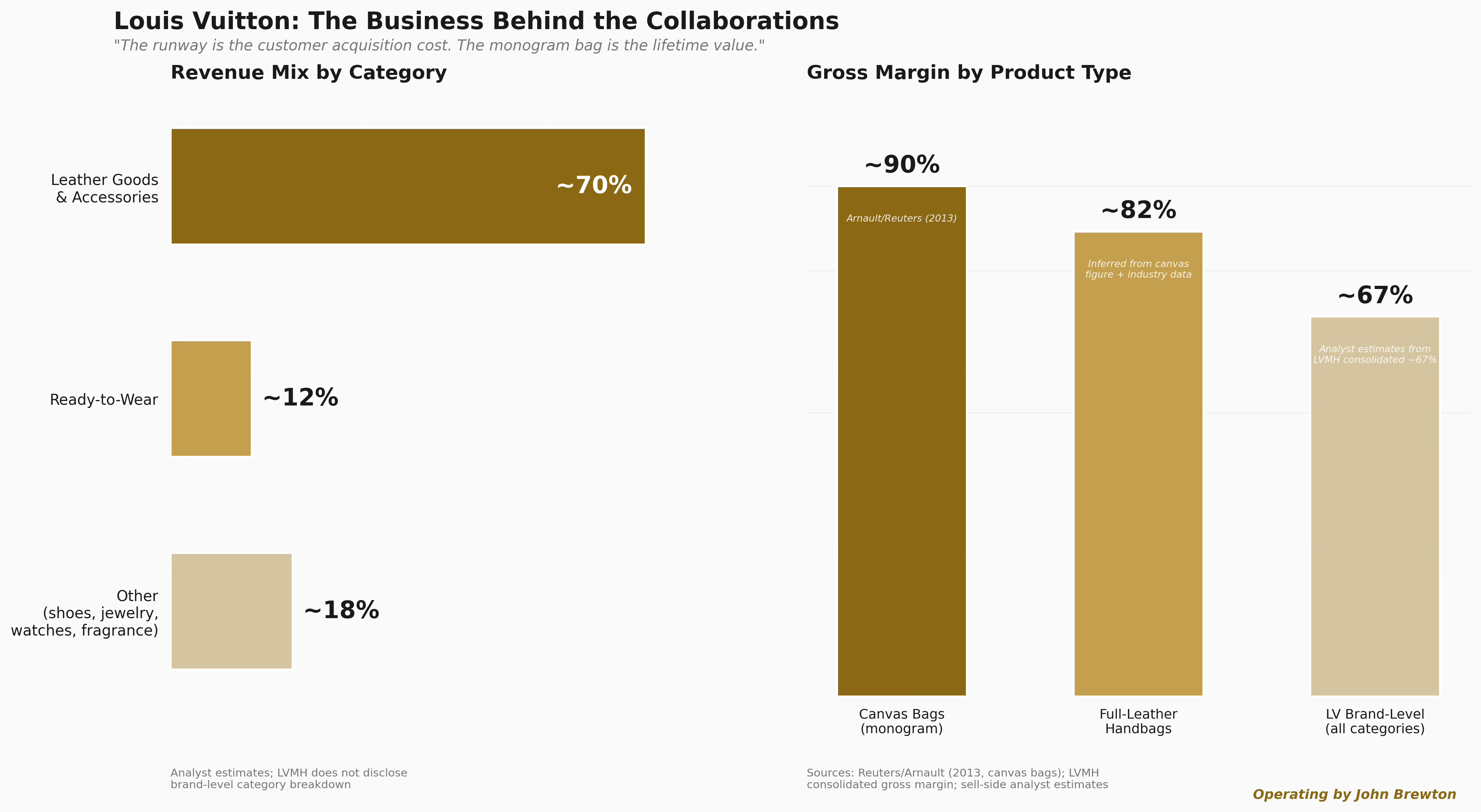
But here’s the part most people misunderstand: the clothes are not the business. The runway shows, the celebrity creative directors, the fashion-week spectacles, these are not the profit center either. They are the attention infrastructure. The actual business is leather goods and accessories. Analyst models allocate roughly two-thirds to three-quarters of LV’s revenue to bags, wallets, trunks, and small leather goods. According to a Reuters report referencing LVMH Chairman Bernard Arnault, classic monogram canvas bags generate gross margins of approximately 90%. Ready-to-wear represents only about 10–15% of sales.
The runway is the customer acquisition cost.
The monogram bag is the lifetime value.
Every collaboration LV has run over three decades, from Takashi Murakami’s $345 million first-year sales to Supreme’s resale frenzy to Pharrell’s billion-view debut show, serves a single strategic purpose: get new people into the funnel while reinforcing the brand codes that keep existing buyers loyal. And the brand codes never change. The monogram was there before Marc Jacobs. It survived Sprouse, Murakami, Prince, Koons, Kusama, Supreme, Virgil Abloh, and Pharrell.
It will survive whoever comes next.
What I found, studying three decades of LV’s collaboration history, is that the system runs on six hard principles:
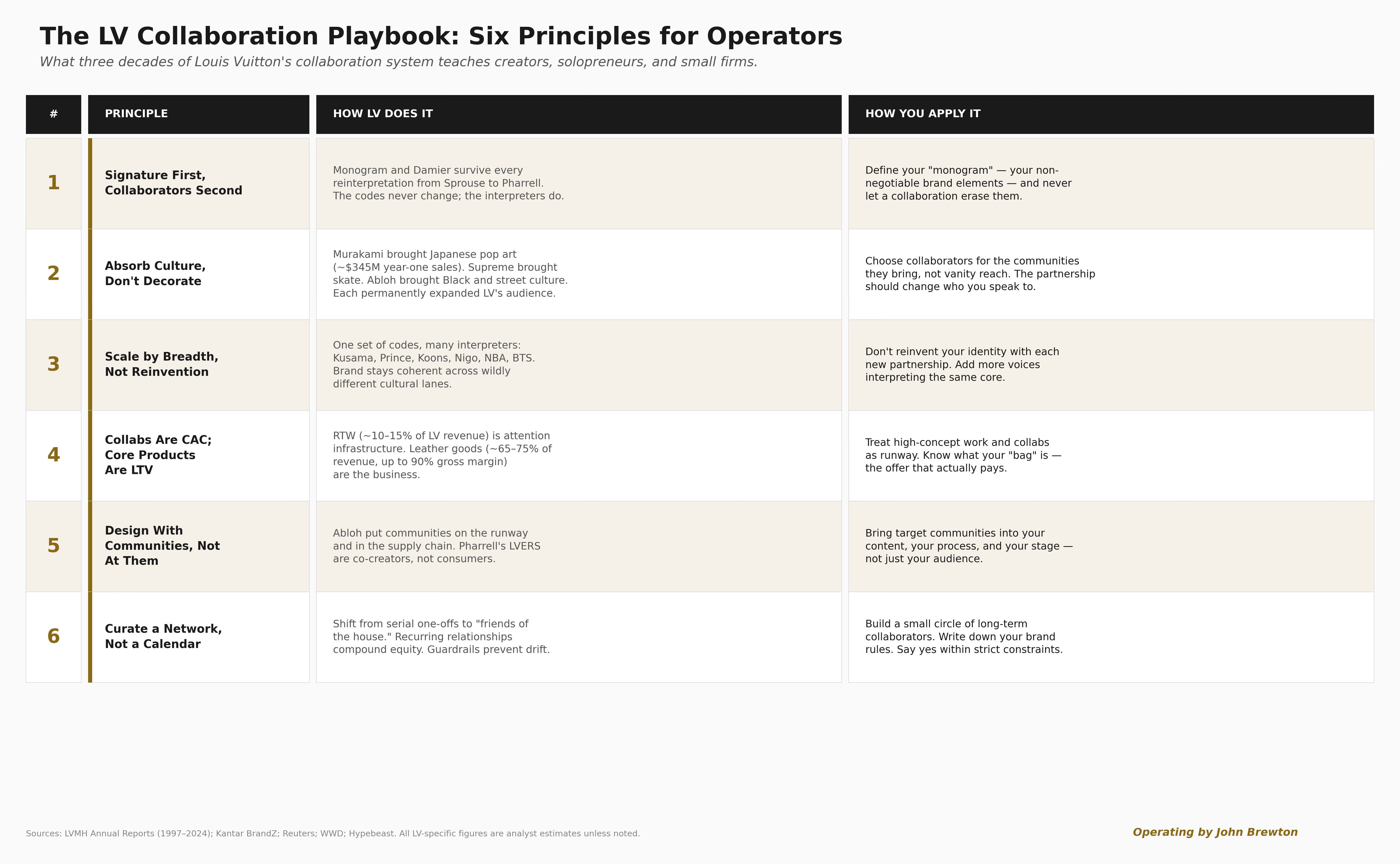
Signature first, collaborators second: Your brand’s core identity is the non-negotiable anchor. If your signature can’t survive reinterpretation, it isn’t strong enough.
Collaborate to absorb culture, not decorate product: Choose collaborators for the communities and cultural lanes they bring, not just for aesthetics or clear parallel.
Scale through breadth of collaborators, not reinvention of identity. One set of codes, many interpreters.
Runway and collaborations are marketing engines for the core business: High-concept work is a line item in CAC. Know what your “bag” is, the offer that actually pays.
Design with communities, not just for them: Bring your target communities onto the stage, into your content, into your process, not just into your audience.
Build a curated network, not a collaboration calendar: Long-term “friends of the house” compound brand equity. Random one-offs create noise.
Those six principles are visible in every era of the house’s modern history. Jacobs proved the monogram could survive radical reinterpretation. Murakami proved collaboration could move a P&L. Supreme proved a single drop could compress years of audience acquisition into one cultural moment. Abloh proved that embedding community into leadership was more powerful than any product partnership. Pharrell is proving that a creative director’s outside network can function as the brand’s distribution channel.
The full article below traces how each of these principles showed up across each era, with the verified financial data behind them, sourced from LVMH annual reports, earnings releases, Kantar BrandZ rankings, and trade-press estimates where LVMH doesn’t disclose. I also cover the risks: what happens when collaboration becomes fatigue, how LV manages that tension through guardrails and IP enforcement, and what the 2024 luxury slowdown reveals about the limits of cultural capital as a business strategy.
If you operate a business, build a brand, or create content, the lesson is not to copy Louis Vuitton. It is to understand the system underneath the spectacle.
Hermès shows what happens when you say almost no to the world.
Louis Vuitton shows what happens when you say yes constantly, but only on your own terms.
The full article, financial analysis, charts, and collaboration playbook continue below for paid subscribers.
🔒 The full Operating Stories deep dive continues below — including era-by-era financial breakdowns, the LV Collaboration Playbook infographic, and actionable frameworks for applying these principles to your own business. [Upgrade to paid to continue reading →]
Become a paid subscriber to access all the content ($7.99 / month) or get to work with us and become a member of the Operating Founder cohort for $99 (annual).
What Is Louis Vuitton’s Business Model?
Louis Vuitton is the largest luxury brand on earth by a wide margin. Analysts estimate LV generates roughly €22–25 billion in annual revenue, accounting for more than half of LVMH’s Fashion & Leather Goods segment, which itself produced €42.2 billion in 2023. According to Kantar BrandZ, Louis Vuitton has held the position of the world’s most valuable luxury brand for eighteen consecutive years, with a current brand valuation of approximately $130 billion.
But here is the part most people misunderstand: the clothes are not the business. The runway shows, the celebrity creative directors, the fashion-week spectacles — these are not the profit center. They are the attention infrastructure. The actual business is leather goods and accessories: bags, wallets, trunks, small leather goods.
Analyst models consistently allocate roughly two-thirds to three-quarters of Louis Vuitton’s revenue to leather goods and accessories, with ready-to-wear representing only about 10–15% of sales and the balance going to shoes, jewelry, watches, and other lines.
The margins tell the story even more clearly. According to a 2013 Reuters report referencing comments from LVMH Chairman Bernard Arnault, classic monogram canvas bags — which at the time accounted for roughly two-thirds of LV’s business — generate gross margins of approximately 90%. Full-leather handbags carry somewhat lower but still extraordinary margins, likely north of 80%. At the brand level, external analysts infer an overall gross margin in the mid-60s to high-60s percent range, materially above the LVMH group average.
Sources: LVMH Key Figures (2023 F&LG segment revenue); Kantar BrandZ Global Top 100 (2024, 18th consecutive year at #1 luxury brand, brand value ~$129.8B); Reuters (2013, Arnault on canvas bag margins); analyst estimates for LV-specific revenue via sell-side reconstructions.
This is a critical distinction because it explains everything LV does with collaboration. Every partnership, every creative director appointment, every runway spectacle serves a single strategic purpose: get new people into the top of the funnel while reinforcing the brand codes that keep existing buyers loyal. The runway is the customer acquisition cost. The monogram bag is the lifetime value.
And the Fashion & Leather Goods segment is where LVMH makes its money. It represents roughly 49% of the conglomerate’s total revenue but an estimated 75–78% of group operating income. Louis Vuitton is the largest engine inside that engine.
📊 THE NUMBERS
LV estimated revenue: €22–25B (analyst estimates; LVMH does not disclose brand-level revenue)
F&LG segment: 49% of LVMH revenue, ~75–78% of group operating income
Leather goods & accessories: ~65–75% of LV revenue, with canvas bags at ~90% gross margin
RTW: ~10–15% of LV revenue — strategic for brand halo, not the profit driver
#1 luxury brand globally for 18 consecutive years (Kantar BrandZ), valued at ~$130B
The Marc Jacobs Era (1997–2013): Inventing the Collaboration Playbook
Before Marc Jacobs, Louis Vuitton did not have a ready-to-wear line. It was a leather goods house — iconic, respected, but not a fashion brand in the modern sense. LVMH hired Jacobs to change that, and what he built over sixteen years was not just a clothing line. It was a repeatable system for using art-world collaboration to expand the brand’s cultural surface area without diluting its core.
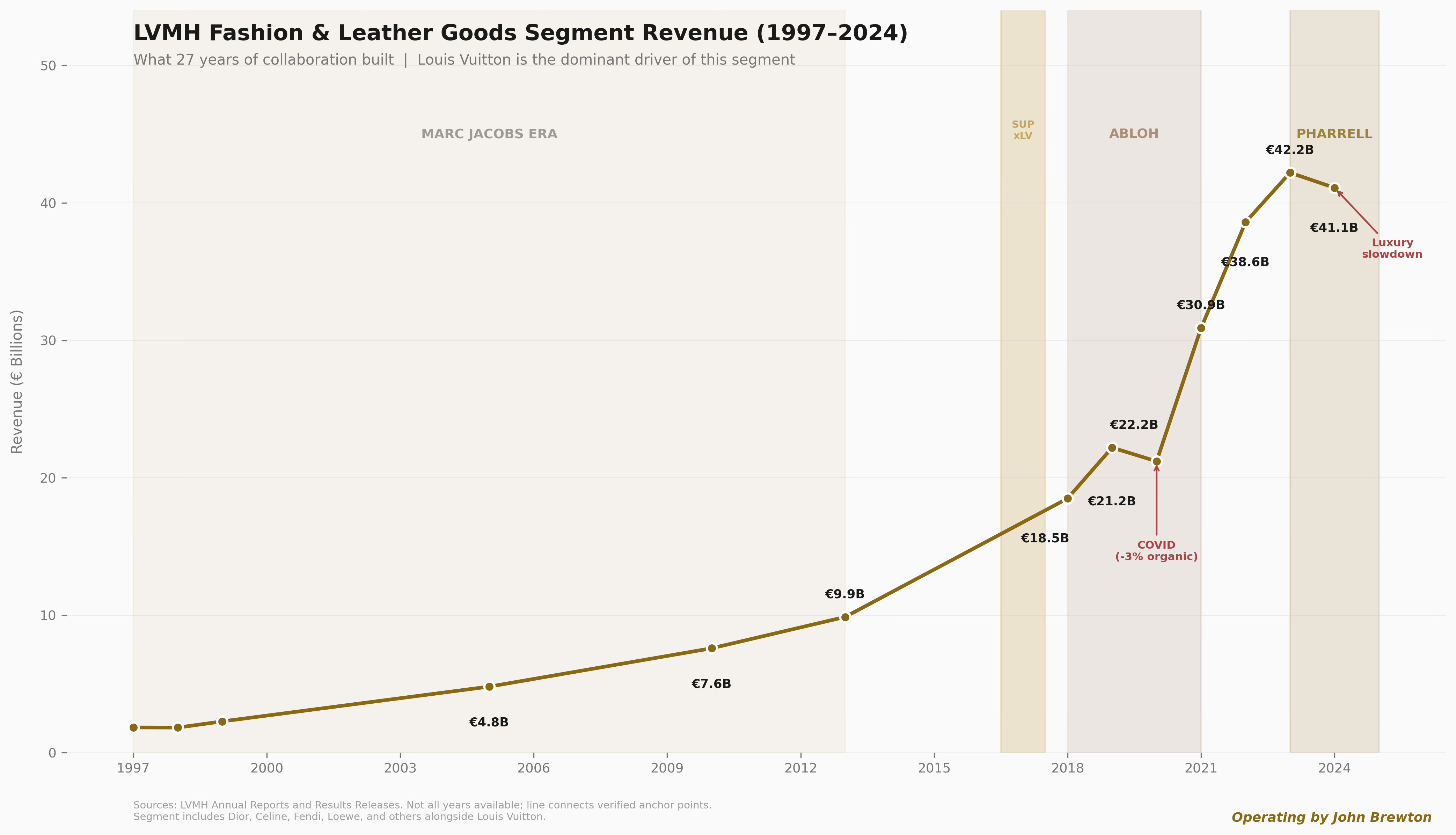
The scale of what Jacobs built is visible in the segment data. When he arrived in 1997, LVMH’s Fashion & Leather Goods segment generated €1.84 billion in revenue. By the time he departed in 2013, that same segment had reached €9.88 billion — a 5.4x increase over sixteen years. Louis Vuitton was the dominant driver of that growth.
Sources: LVMH 1999 Annual Report (1997 F&LG revenue €1,837M); LVMH 2013 Results (F&LG revenue €9,882M, 5% organic growth).
Stephen Sprouse (2001):
Can the Monogram Survive a Hack?
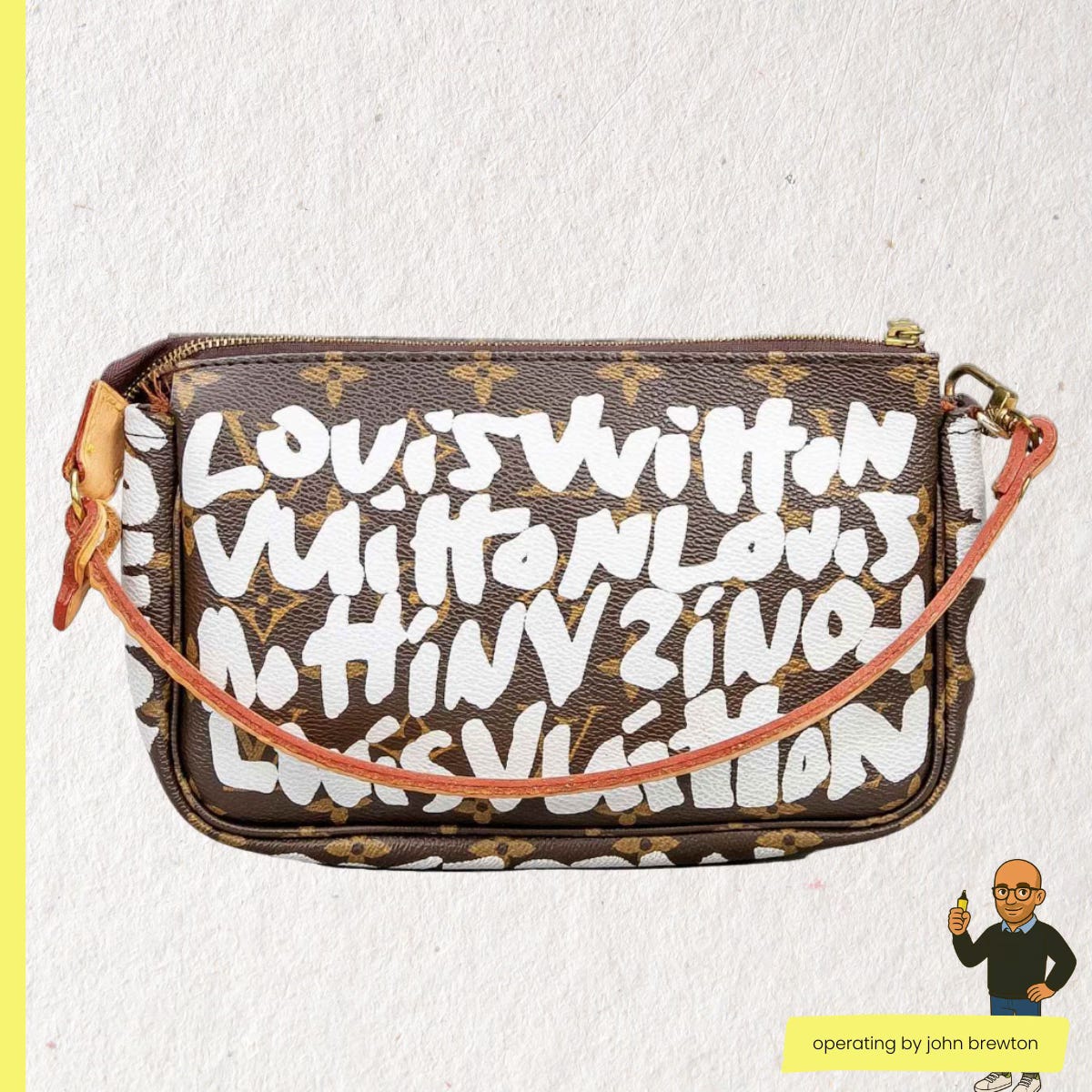
Jacobs’ first major move was bringing in New York graffiti artist Stephen Sprouse to spray neon graffiti across LV’s signature monogram canvas. This was a genuine risk. The monogram was sacred. It was the single most recognizable pattern in luxury. And here was Jacobs handing a spray can to a downtown artist and saying: go.
The Sprouse collaboration proved something that became foundational to everything LV did afterward: the monogram was strong enough to survive radical reinterpretation. You could graffiti it, neon it, invert it, and it was still unmistakably Louis Vuitton. The signature did not need protection from creativity. It needed creativity to stay alive.
OPERATING PRINCIPLE #1: Signature First, Collaborators Second
Your brand’s core visual and conceptual identity is the non-negotiable anchor. Everything important touches it; nothing important replaces it. If your signature can’t survive reinterpretation, it isn’t strong enough.
Takashi Murakami (2003): Culture Absorption as Commercial Proof
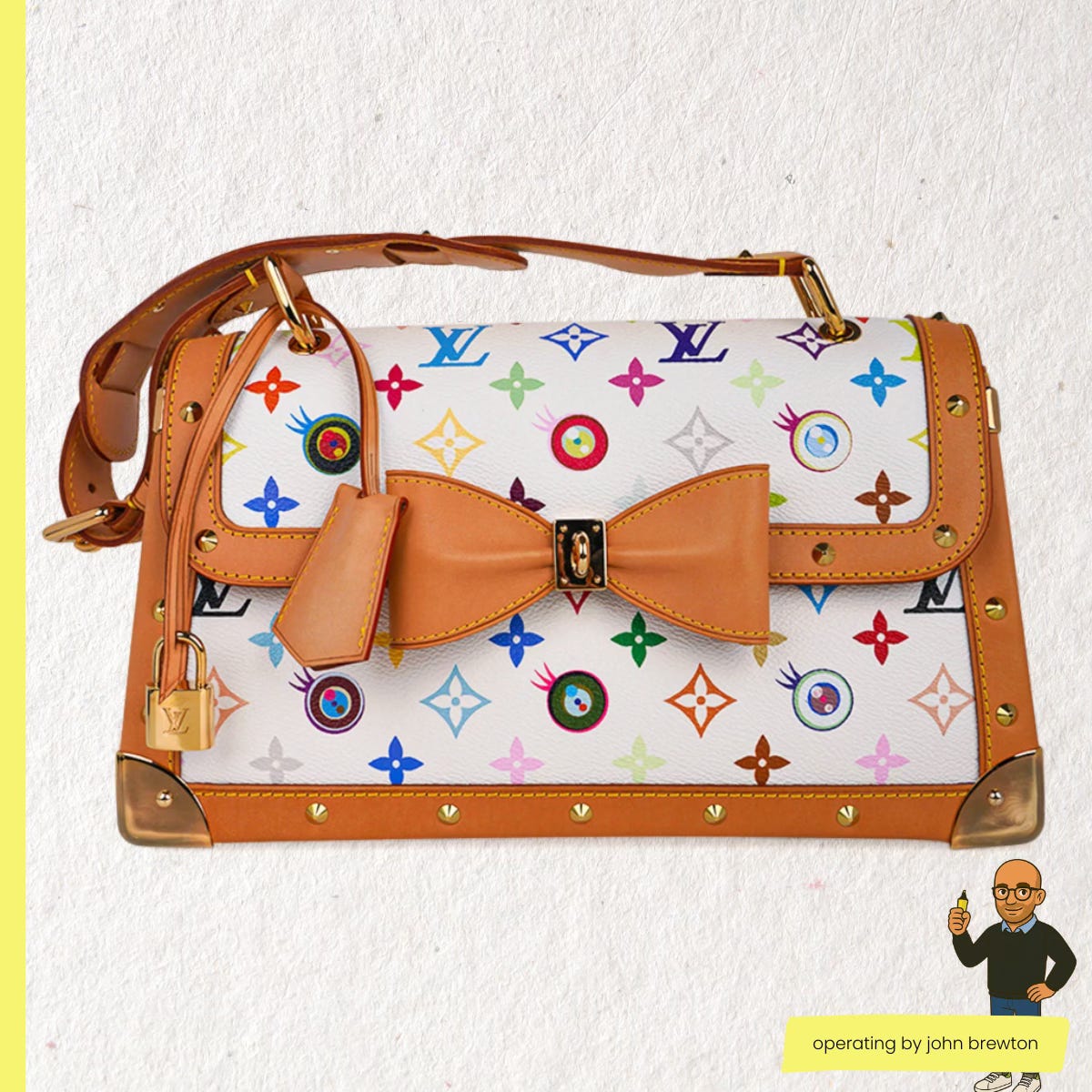
If Sprouse was the test, Murakami was the proof of concept at scale. Jacobs invited Japanese pop artist Takashi Murakami to reimagine the monogram in his signature multicolor style — bright, playful, referencing anime and otaku culture as much as fine art. The result was a collection that looked nothing like traditional luxury and sold like nothing luxury had ever seen.
According to Women’s Wear Daily, market sources estimated that Murakami bag sales reached approximately $345 million in the year of release alone — roughly 10% of Louis Vuitton’s entire revenue at the time. The figure has been widely rounded to “over $300 million” in subsequent reporting, but the original trade-press estimate points to a single-year impact that was unprecedented for an artist collaboration.
Source: Women’s Wear Daily (2003), as documented by JoySauce (2025). Note: This is an industry estimate from “market sources,” not a figure disclosed by LVMH. No reliable lifetime (2003–2015) revenue total exists in public sources.
But the revenue was almost secondary to the strategic outcome. Through Murakami, LV absorbed an entire cultural lane — Japanese pop art, youth culture, the art-fashion crossover — and converted it into brand equity. The customer base got younger. The brand got more global. And the monogram remained the through-line. The partnership ran for thirteen years, making it the longest artist collaboration in luxury history.
OPERATING PRINCIPLE #2: Collaborate to Absorb Culture, Not Decorate Product
Choose collaborators for the communities and cultural lanes they bring — not just for aesthetics. The collaboration should permanently expand who the brand speaks to.
📊 THE NUMBERS
Murakami x LV year-one sales: ~$345M (WWD/market sources, 2003)
Represented ~10% of LV’s total revenue in the launch year
Partnership duration: 13 years (2003–2015), longest artist collaboration in luxury history
Redefined the customer demographic: younger, more global, more culturally diverse
Kusama, Prince, Koons: Scaling Through Breadth
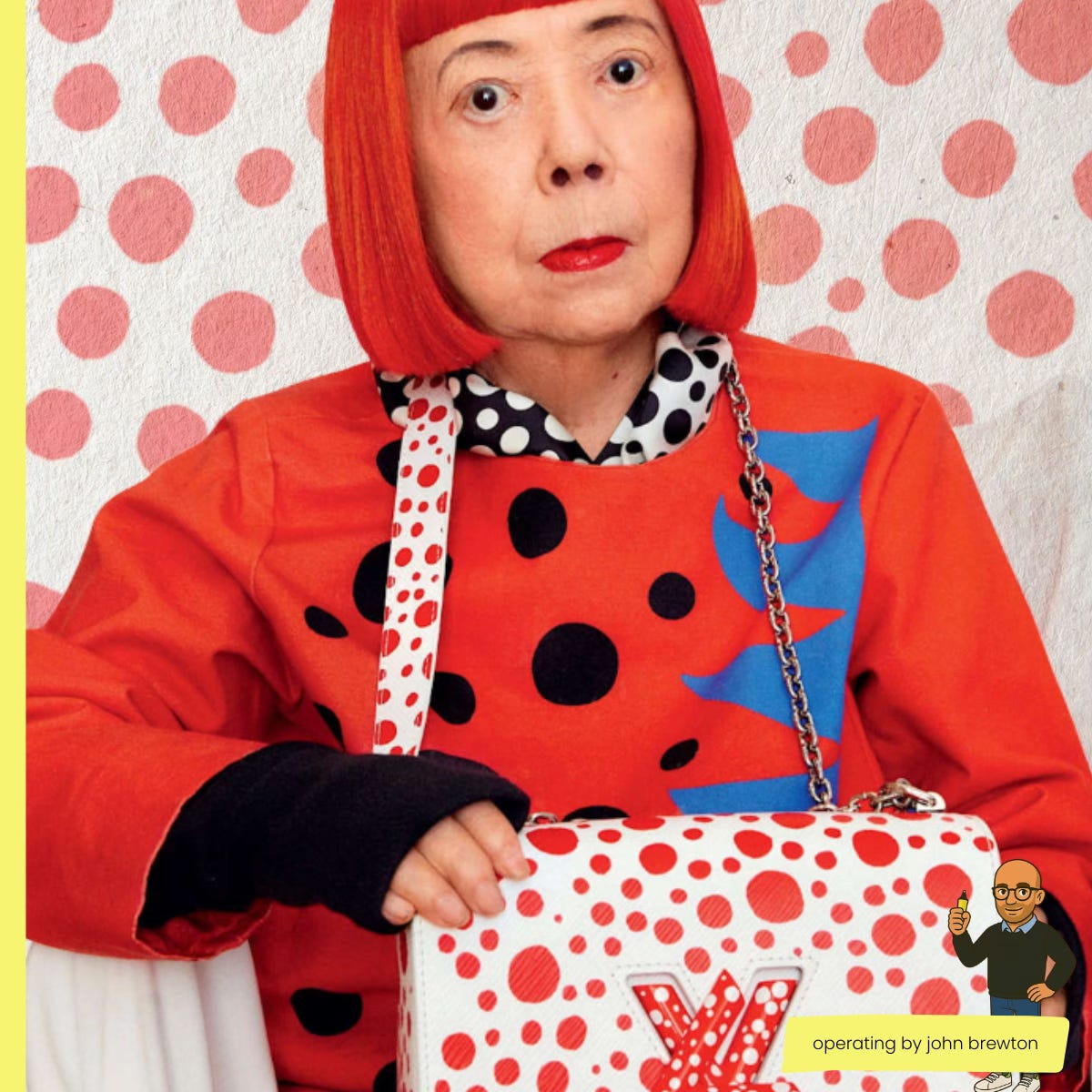
After Murakami, Jacobs did not stop. He brought in Yayoi Kusama and her infinity polka dots. He worked with Richard Prince on provocative nurse imagery. He later brought in Jeff Koons to overlay Old Master paintings onto LV bags. Each collaboration pulled in a different art-world audience, a different set of cultural references, a different customer.
But here is the critical point: through all of it, the brand identity remained stable. The monogram was always present. The Damier pattern anchored collections. The silhouettes — Speedy, Neverfull, Keepall — stayed constant. LV was not reinventing itself with each new artist. It was widening the aperture of who it spoke to while keeping the core codes fixed. One identity, many interpreters.
OPERATING PRINCIPLE #3: Scale Through Breadth of Collaborators, Not Reinvention of Identity
Keep one set of brand codes. Add more interpreters. This is how you stay coherent while touching multiple audiences, subcultures, and cultural moments.
Jacobs’ Outcome:
What Sixteen Years of Collaboration Built
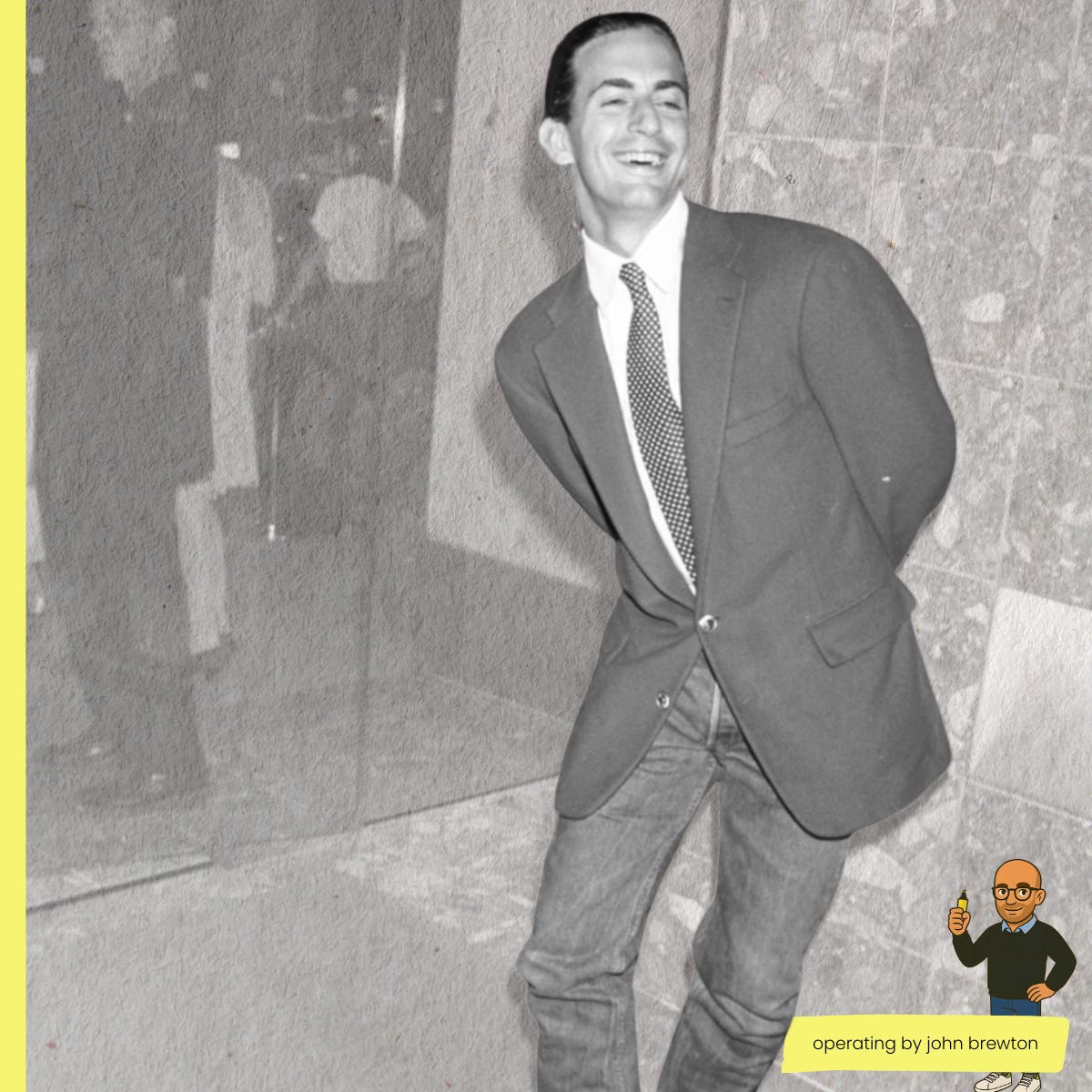
By the time Jacobs left LV in 2013, the Fashion & Leather Goods segment had grown from €1.84 billion to €9.88 billion — more than a fivefold increase. Louis Vuitton had gone from a leather goods manufacturer to the defining pop-culture luxury reference of the 2000s. Interbrand valued the brand at $28.4 billion in 2013, making it the most valuable luxury brand in the world by their methodology. Jacobs proved that a luxury house could collaborate aggressively without losing its identity — as long as the signature came first and the collaborators were chosen for culture, not decoration.
For operators and creators: Jacobs’ era teaches one thing above all. Define your “monogram” — the non-negotiable elements of your brand — and then become curator-in-chief. Your job is not to do everything yourself. It is to choose the right people to reinterpret your core, knowing that the core is strong enough to hold.
📊 THE NUMBERS
F&LG segment: €1.84B (1997) → €9.88B (2013) — 5.4x growth over 16 years
LV brand value: $28.4B by 2013 (Interbrand), #1 luxury brand globally
Collaboration model (artist x monogram x limited availability) became the industry template
Supreme and the Drop Model:
Scarcity Inside Collaboration
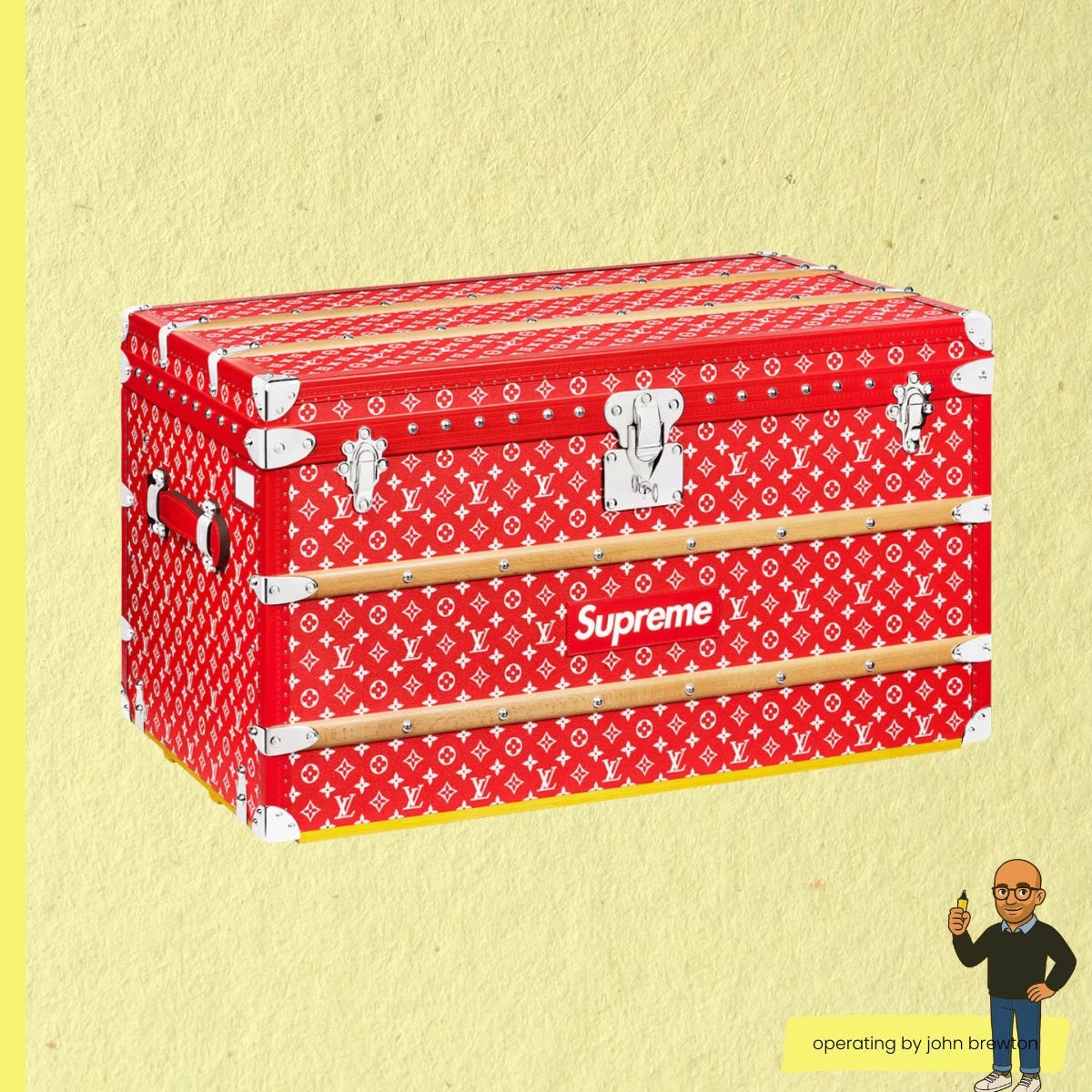
The Supreme collaboration of 2017 was the moment LV’s collaboration operating system went from fashion-industry case study to mainstream cultural phenomenon. And it demonstrated nearly every principle at once.
Start with the visual. The Supreme box logo sat alongside the LV monogram — not replacing it, sharing space with it. Signature first. Then consider what LV was actually acquiring: the skate and streetwear community at scale. Supreme’s audience was young, male, obsessive about drops, and largely outside the traditional luxury customer base. This was not a design partnership. It was a cultural acquisition executed through product.
The commercial results were visible immediately. LVMH’s H1 2017 press release explicitly named the Supreme collaboration as a “highlight of the first half,” alongside the Jeff Koons partnership. The Fashion & Leather Goods segment delivered 17% reported revenue growth and 14% organic growth in H1 2017, with group profit from recurring operations up 23%. LVMH described Louis Vuitton’s performance as showing “outstanding momentum.”
Source: LVMH H1 2017 Press Release (”Organic Revenue Growth of 12% in the First Half of 2017”). Supreme x LV explicitly cited as a “highlight” in the Fashion & Leather Goods section.
A note on what the data does and doesn’t tell us: media widely attributed the 23% profit increase to the Supreme collaboration, but that figure reflects total group performance, not an isolated Supreme contribution. LVMH has never disclosed the collaboration’s specific revenue. No credible sell-side analyst has published a clean percentage uplift. What we know is that LVMH itself flagged it in earnings — a vanishingly rare thing for a single product partnership — and that the secondary market provided its own verdict.
Resale prices told the real story. Box logo hoodies that retailed at €750 (approximately $860) cleared up to $25,000 in the immediate aftermarket, with more typical transactions in the $5,000–$10,000 range — roughly 6–30x retail. Sweaters originally priced at $450 resold for $5,000–7,000. Lines wrapped around blocks in cities that didn’t even have LV stores.
Source: Hypebeast (July 2017, early resell price compilation); Heart of Cool (resell multiples and market analysis).
But the real lesson is in what LV didn’t do. They did not turn Supreme into an ongoing line. They did not chase the hype with a sequel drop. They ran one collection, made it scarce, let the secondary market amplify the story, and moved on. The collaboration compressed what might have been years of audience acquisition into a single, explosive moment — and then LV returned to its codes.
OPERATING PRINCIPLE #4: Runway and Collaborations Are Marketing Engines for the Core Business
High-concept fashion and drops are a line item in customer acquisition cost. Bags and accessories are the lifetime value. Every collaboration should make the core business bigger.
📊 THE NUMBERS
LVMH H1 2017: F&LG +17% reported, +14% organic; group profit +23%
Supreme x LV explicitly cited as “highlight” in LVMH earnings release (extremely rare)
Resale: box logo hoodies at 6–30x retail ($860 retail → up to $25,000 resale)
Specific revenue contribution: not disclosed by LVMH or credibly estimated by analysts
For operators and creators: The Supreme model is the playbook for a single high-leverage collaboration. You do not need to run partnerships constantly. You need one that compresses audience acquisition, runs on scarcity rather than volume, and drives traffic back to your core offer. Then you stop. The restraint after the drop matters as much as the drop itself.
The Virgil Abloh Era (2018–2021): Collaboration as Identity and Community
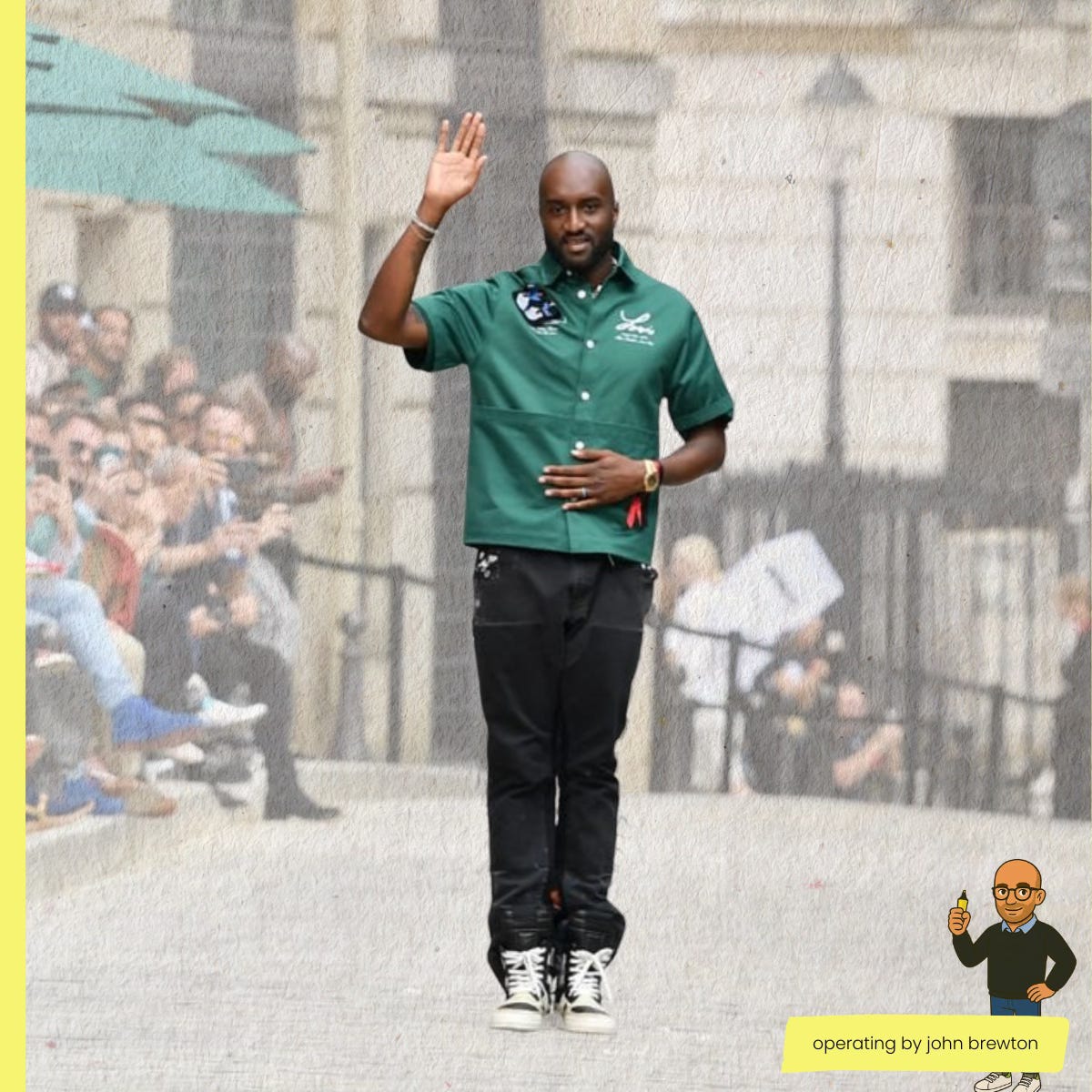
When LVMH appointed Virgil Abloh as men’s artistic director in 2018, it was a signal heard far beyond the fashion industry. Abloh was the first Black artistic director in the history of the house. He was a trained architect, not a fashion-school graduate. He came from streetwear, not couture. And his appointment told the world that LV was not just collaborating with culture — it was embedding culture into its leadership.
The timing matters. In 2018, LVMH’s Fashion & Leather Goods segment stood at roughly €18.5 billion. By the end of Abloh’s tenure in 2021, it had reached €30.9 billion — a 47% organic increase over 2020 and a 42% increase over pre-pandemic 2019. Even accounting for the fact that this segment houses Dior, Celine, Fendi, and others alongside LV, LVMH repeatedly singled out Louis Vuitton as the primary engine of that growth.
Sources: LVMH Annual Reports and results releases (2018–2021). F&LG organic growth: +15% (2018), +17% (2019), -3% (2020), +47% (2021 vs 2020), +42% (2021 vs 2019).
Collaboration as Cultural Form
Abloh did not treat collaboration as a marketing tactic. He treated it as a creative philosophy. His partnerships — Nigo, Nike, the NBA, BTS — were not about putting logos next to each other. Each one was a deliberate expansion into a specific subculture. The Nigo collaboration brought Japanese streetwear heritage. The NBA partnership brought sports culture and its audience. BTS brought global K-pop fandom. Nike brought the sneaker community Abloh had helped build through Off-White.
What made Abloh’s approach distinctive was that he framed collaboration itself as a “new cultural form.” It was not a gimmick layered on top of the product. The act of bringing two worlds together was the creative output. And each collaboration added a permanent community to LV’s orbit.
Designing With Communities, Not At Them
Abloh’s most significant contribution may not have been any single product. It was the way he brought people into the process. His casting choices put Black models, artists, musicians, and athletes on the LV runway in ways the house had never done. He championed the LVMH Black Database, connecting Black-owned businesses to the luxury supply chain. His shows were cultural events that blurred the line between audience and participant.
This was not diversity as branding exercise. It was a strategic insight: the people you collaborate with become your positioning. When your community sees itself in your brand — on the runway, in the creative process, in the casting — they do not just buy. They advocate. They distribute. They become the brand’s cultural infrastructure.
OPERATING PRINCIPLE #5: Design With Communities, Not Just For Them
Bring your target communities onto the stage, into your content, into your process — not just into your audience. The people around your brand are the positioning.
Commercial and Brand Outcomes
Under Abloh, LV’s menswear business grew dramatically. LVMH consistently described Louis Vuitton’s performance as “exceptional” across 2018–2019, and even during the pandemic, F&LG declined only 3% organically in 2020 — materially better than Perfumes & Cosmetics (-22%) or Selective Retailing (-30%). By 2021, the segment delivered record revenue and record profitability, with profits up 79% versus 2020 and 75% versus 2019.
LVMH also took a 60% stake in Abloh’s own brand, Off-White, in July 2021. The purchase price was not disclosed, but the deal’s strategic intent was explicit: position Abloh and Off-White as platforms for broader collaboration across LVMH, expanding in luxury streetwear and adjacent categories. The message was clear — Abloh’s personal brand and network were strategic assets worth owning, not just renting.
Sources: LVMH results releases (2018–2021); Forbes and Retail Dive (Off-White 60% stake, July 2021; terms undisclosed). LVMH expanded LV menswear distribution by 25–28 additional stores, per Forbes.
📊 THE NUMBERS
F&LG segment: €18.5B (2018) → €30.9B (2021) — segment nearly doubled
2021 F&LG profit: +79% vs 2020, +75% vs 2019 (record levels)
COVID resilience: F&LG only -3% organic in 2020 vs -22% (P&C) and -30% (Selective Retail)
LVMH acquired 60% of Off-White (July 2021, price undisclosed)
LV menswear distribution expanded by 25–28 stores
For operators and creators: Abloh’s era is the case study for community-led brand building. Your collaborators are not vendors. They are co-owners of your brand’s cultural position. The question is not “who has a big audience?” It is “who brings a community I want to permanently absorb?”
The Pharrell Era (2023–Present): The Cultural Maison and the Human Network
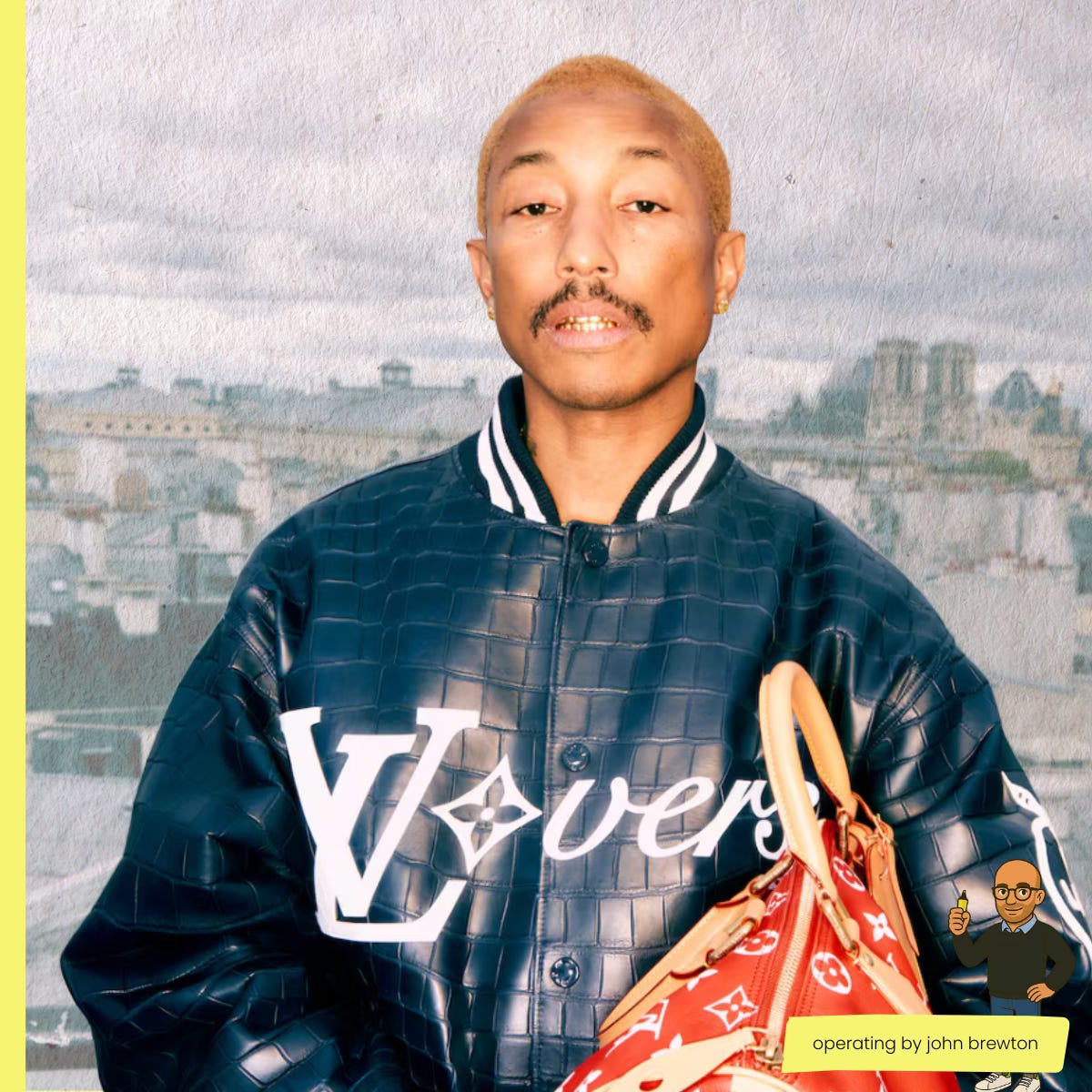
Pharrell Williams’ appointment as men’s creative director pushed LV’s collaboration model into its most ambitious form. Where Jacobs brought art, Abloh brought community, Pharrell brings the entire concept of a human network as a creative and commercial asset.
The Portfolio Creative Director
Pharrell’s deal with LV is structured differently from a traditional creative director role. He works roughly one-third of his time for the house, continuing his own music, brand partnerships, and ventures simultaneously. This was not a compromise — it was the strategy. LV was betting that Pharrell’s diverse network of relationships across music, entertainment, art, and business would function as a distribution channel for the brand.
This is a genuinely new model. The creative director’s outside projects strengthen the flagship role rather than diluting it. Every Pharrell appearance, collaboration, and cultural moment outside LV pulls his network closer to the house.
One Billion Views: The Attention Engine
Pharrell’s debut show for LV Spring/Summer 2024, staged on the Pont Neuf bridge in Paris, generated over one billion views across platforms. That number is worth sitting with — and worth understanding precisely. According to Women’s Wear Daily, the figure comprises approximately 775 million views on Louis Vuitton’s own platforms plus about 300 million views via press and partner accounts carrying livestreams and related content.
To be transparent about the sourcing: this is a marketing metric constructed by LV and communicated through WWD. It is not independently audited or verified by a third-party measurement body. But even with that caveat, the scale is striking. For context, the previous LV menswear show (Fall 2023) generated roughly 441 million views on LV’s platforms alone — meaning Pharrell’s debut more than doubled the brand’s baseline show performance.
Sources: Women’s Wear Daily (primary report of 1B+ views, citing LV-provided data); secondary coverage in Yahoo Lifestyle and World Music Views. Not independently audited.
📊 THE NUMBERS
Debut show: 1B+ views (LV internal data, reported via WWD)
Breakdown: ~775M on LV platforms + ~300M via press/partner accounts
Comparison: more than 2x the previous LV menswear show (~441M views)
Methodology note: marketing metric, not independently audited
Remixing the Icons: Signature First, Again
Pharrell’s design approach has been to take LV’s existing icons and reimagine them through his cultural lens. The Damier pattern reinterpreted as pixels. The Speedy bag reimagined in new materials and proportions. The Millionaire sunglasses revived. A Tiffany collaboration that operated within the LVMH family. In every case, the signature comes first — Damier, monogram, Speedy — and the reinterpretation follows.
Three eras of creative direction, three radically different personalities, and the same rule holds: the codes do not change. The interpreters change.
LVERS and the Friends of the House
Perhaps Pharrell’s most consequential innovation is the LVERS concept — a curated, bounded network of artists, athletes, musicians, and cultural figures who orbit the brand. This is not random influencer marketing. It is a deliberate community architecture. These are “friends of the house,” chosen for cultural alignment and maintained as long-term relationships, not transactional one-offs.
For anyone building a brand or audience, this is the model to study. Your “email list” or community is not just a distribution channel. It is a curated network of collaborators, superfans, and cultural allies. The quality and coherence of that network is a strategic asset — one that compounds over time if you manage it with the same care LV brings to its friends of the house.
OPERATING PRINCIPLE #6: Build a Curated Network, Not a Collaboration Calendar
Long-term “friends of the house” compound brand equity. Random one-offs create noise. The human graph around your brand is an asset to manage deliberately.
The Slowdown Test
Pharrell’s era also provides an important stress test for the collaboration model. In 2024, LVMH’s Fashion & Leather Goods segment declined approximately 3% to around €41 billion — the first non-pandemic year in which the segment contracted. The broader luxury market experienced a significant normalization after the 2021–22 post-COVID boom, with aspirational consumers pulling back and Chinese demand becoming more volatile.
For context: Hermès continued to deliver steady high-single-digit growth. Richemont outperformed on the strength of jewelry. Kering struggled with double-digit declines at Gucci. LVMH sat in the middle — declining modestly but retaining strong margins and pricing power. F&LG still delivered operating margins around 35% even as volumes softened.
Sources: LVMH 2024 results and key figures (F&LG ~€41.1B, down ~3%); sector analyses via Fintool and Forbes (Pam Danziger, July 2025, on luxury slowdown and LVMH competitive positioning).
This matters for the operating lesson. Cultural capital — the billion-view shows, the celebrity campaigns, the social-native strategy — does not make a brand recession-proof. But it does help defend market share and pricing power when the tide goes out. Pharrell’s LV is best understood as a case study in using collaboration and cultural reach to cushion a cyclical downturn, not reverse it. For operators, that’s the honest version of the story, and it’s more useful than a pure growth narrative.
For operators and creators: Pharrell’s era proves that your network is your net worth — not as a platitude, but as an operating model. It also proves that cultural capital has limits. The collaboration system drives relevance and defends positioning, but it does not override macroeconomic headwinds. Build the system anyway. When the downturn comes, you’ll be glad you did.
Guardrails: How LV Avoids Collaboration Fatigue
Every strength carries a shadow risk. LV’s collaboration-driven model invites an obvious danger: fatigue. When every season brings a new partnership, a new cultural reference, a new celebrity creative director, the brand risks becoming a platform rather than a house — all signal, no substance.
LV has managed this risk through three consistent practices.
First, the codes always reset. After every collaboration cycle, LV returns to the monogram, the Damier, the trunks. These are not legacy artifacts. They are the brand’s gravitational center. No matter how far a collaboration takes the brand into new cultural territory, the core products pull everything back.
Second, IP enforcement is strategic, not defensive. LV aggressively protects its visual identity — the monogram pattern, the specific color codes, the trunk silhouettes. This is not just legal hygiene. It is brand architecture. By enforcing visual consistency everywhere, LV ensures that each collaboration reads as a chapter in one story, not a spin-off.
Third, the shift from one-offs to recurring relationships. Under Pharrell especially, LV has moved from a model of serial collaborations to a tighter circle of “friends of the house.” This reduces noise, builds deeper creative relationships, and creates continuity for the customer. The audience learns to trust the brand’s curation rather than chasing every drop.
For operators and creators: Write down your collaboration guardrails before you need them. A handful of strong brand rules plus curated, long-term partners will compound your brand. Chasing every partnership opportunity will fragment it. Say yes within strict constraints.
The LV Collaboration Playbook: Six Principles for Operators
The six operating principles that emerge from three decades of Louis Vuitton’s collaboration system, translated for creators, solopreneurs, and small firms
Closing
Hermès and Louis Vuitton are the two most valuable luxury brands on earth, and they operate on almost perfectly opposite logics. Hermès turns constraint into identity. It manufactures scarcity by controlling every variable — materials, production speed, distribution, the customer relationship itself. The operating system is discipline.
Louis Vuitton turns collaboration into a scalable operating system for relevance. It absorbs culture by choosing the right creative partners, running them through hard brand codes, and using the resulting energy to drive a core business that has not fundamentally changed in decades. The LVMH Fashion & Leather Goods segment grew from €1.84 billion in 1997 to over €42 billion in 2023 — a more than twenty-fold increase built on a foundation of monogram canvas, Damier check, and an ever-widening circle of creative interpreters.
The monogram was there before Marc Jacobs. It survived Sprouse, Murakami, Kusama, Supreme, Abloh, and Pharrell. It will survive whoever comes next. It survived a pandemic. It is surviving a luxury slowdown. The signature holds.
For operators, creators, and founders, the lesson is not to copy Louis Vuitton. It is to understand the system underneath the spectacle. Define your signature. Choose collaborators for what they absorb, not what they decorate. Treat your creative work as a marketing engine for the thing that actually pays. Build a curated network, not a transaction log. And write down your guardrails before success tempts you to abandon them.
Hermès shows what happens when you say almost no to the world.
Louis Vuitton shows what happens when you say yes constantly, but only on your own terms.
- j -
Sources and Methodology Notes
This article draws on LVMH’s publicly filed annual reports, earnings releases, and investor communications as primary financial sources. Brand valuation data comes from Kantar BrandZ, Interbrand, and Brand Finance annual rankings. Collaboration-specific financial figures (Murakami, Supreme) rely on trade-press estimates and media reporting, as LVMH does not disclose revenue at the brand or collaboration level. All figures labeled as “analyst estimates” reflect sell-side and independent investor reconstructions of Louis Vuitton’s standalone economics from segment-level LVMH data. Where a figure is an estimate rather than a reported number, this is noted in the text.
Key Financial Sources:
LVMH Annual Reports and Results Releases (1997–2024): F&LG segment revenue, organic growth rates, and operating profitability. Available at lvmh.com/investors.
Kantar BrandZ Top 100 Most Valuable Global Brands (2024): LV as #1 luxury brand for 18 consecutive years, brand value ~$129.8B.
Interbrand Best Global Brands (2024): LV brand value $48.4B, rank #12 globally, leading luxury brand.
Brand Finance Apparel 2024: LV as #1 apparel brand globally, valued at $32.2B.
Reuters (2013): Bernard Arnault on canvas bag margins (~90%) and canvas bags as two-thirds of LV’s business, via Capucine launch coverage.
Women’s Wear Daily (2003): Market-source estimate of Murakami collaboration year-one sales (~$345M), as documented by JoySauce (2025).
LVMH H1 2017 Press Release: Supreme x LV cited as “highlight”; F&LG +17% reported, +14% organic.
Hypebeast (July 2017): Supreme x LV early resell price compilation (box logo hoodies up to $25,000 on ~$860 retail).
Women’s Wear Daily (2023): Pharrell debut show 1B+ views (LV-provided data, ~775M on LV platforms + ~300M via press/partner accounts).
Forbes (August 2021, Kori Hale): LVMH’s acquisition of 60% stake in Off-White; LV menswear distribution expansion.
LVMH Key Figures and 2024 Results Communications: F&LG segment ~€41.1B in 2024, down ~3%.
Note: LVMH does not disclose Louis Vuitton’s standalone revenue, profit, or operating margin. All LV-specific revenue figures (e.g., “€22–25B”) are analyst estimates derived from segment data. The Fashion & Leather Goods segment also includes Dior, Celine, Fendi, Loewe, Loro Piana, Marc Jacobs, and others.
This is the second installment of Operating Stories, a series examining how iconic companies build operating systems that creators, solopreneurs, and small firms can learn from. Subscribe to Operating by John Brewton for the next installment.
John Brewton documents the history and future of operating companies at Operating by John Brewton. He is a graduate of Harvard University and began his career as a Phd. student in economics at the University of Chicago. After selling his family’s B2B industrial distribution company in 2021, he has been helping business owners, founders and investors optimize their operations ever since. He is the founder of 6A East Partners, a research and advisory firm asking the question: What is the future of companies? He still cringes at his early LinkedIn posts and loves making content each and everyday, despite the protestations of his beloved wife, Fabiola, at times.