

A growing number of Substack creators believe the platform is losing its way.
Paid subscriptions are getting harder to grow.
Notes rewards people who post constantly.
Followers do not feel as valuable as email subscribers.
Video, Lives, clips, recommendations, and algorithmic feeds are becoming more prominent, while also adding to the overwhelm some creators feel about the work required to grow and maintain their audiences across the platform.
Scott Carney recently argued that “the subscription model has maxed out.” Taylor Lorenz wrote that she has more than 200,000 followers while her paid subscriptions have “fallen off a cliff,” making Substack feel increasingly like another social media feed.
Their experiences should be taken seriously.
Their conclusion should not.
My response to the concern that Substack is becoming another giant social platform is simple:
Good. It should.
Substack’s transformation into a large social platform is not a betrayal of the original value proposition that the paid newsletter model offered, nor is it an inevitable path to declining quality of content, community, and creator revenues.
It is an opportunity for all involved to grow.
The real danger is not that Substack becomes larger, more algorithmic, more social, or less about writing and more about multimedia.
The danger is that it becomes the wrong kind of social platform.
How I Built a $200,000 Newsletter Business From a Substack Nobody Was Reading
The Five Moves That Turned My Substack Into a $200,000 Business
The Operating Project: Most Coaching Ends With Notes. This Ends With a Machine.
How to Produce World-Class Research with Perplexity Computer & Claude -> Fable 5
Harder does not mean worse
Every valuable market becomes more competitive as more people discover its value.
Early Substack writers entered a much emptier marketplace.
There were fewer publications, fewer professional creators, fewer competing Notes, and fewer sophisticated subscription businesses. Category growth lifted many writers at once.
That was never going to last forever.
Companies, especially the venture-backed kind, have a requirement to grow at all costs.
People frequently describe a platform as “better” when what they really mean is that there were fewer people competing with them on it, so they personally felt more successful.
The loss of early-mover ease is not the same thing as platform decline.
Substack passed five million paid subscriptions in March 2025, after crossing one million in 2021 and three million in February 2024. By April 2026, Substack said nearly 100,000 publishers were earning money, including almost 30,000 outside the United States.
The latest official paid-subscription milestone I can verify is still the five-million figure announced in March 2025. We should not pretend we know that paid subscriptions are continuing to accelerate at the same rate.
But “growth may be slowing” and “the platform is collapsing” are radically different claims.
An individual writer can lose paid subscribers while the total market grows.
A category can become saturated while the broader platform expands.
A creator’s conversion rate can decline because the platform is bringing a much larger and colder audience into the top of the funnel.
That last distinction matters.
A follower who encounters one 100-word Note is not the same kind of prospect as a reader who intentionally visits a publication, reads three essays, and gives the writer their email address upon subscription sign-up.
When a platform adds a high-volume, low-intent discovery channel, the blended conversion percentage can fall even as the number of opportunities to convert readers rises.
That is not necessarily cannibalization.
It is a different funnel.
Email is not a discovery system
Email is one of the most valuable distribution tools a creator can possess.
It is direct.
It is portable.
It reaches people who have explicitly asked to hear from you.
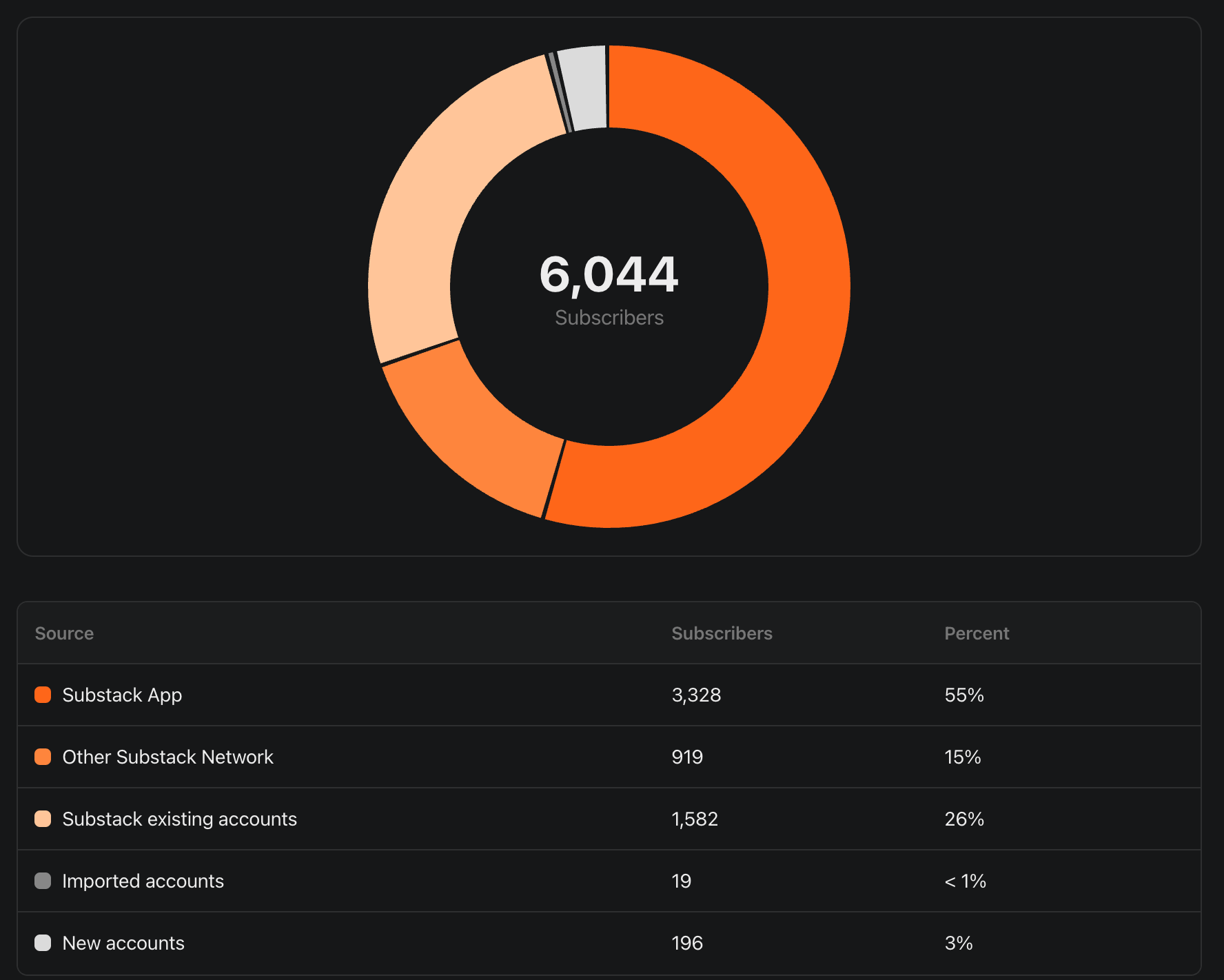
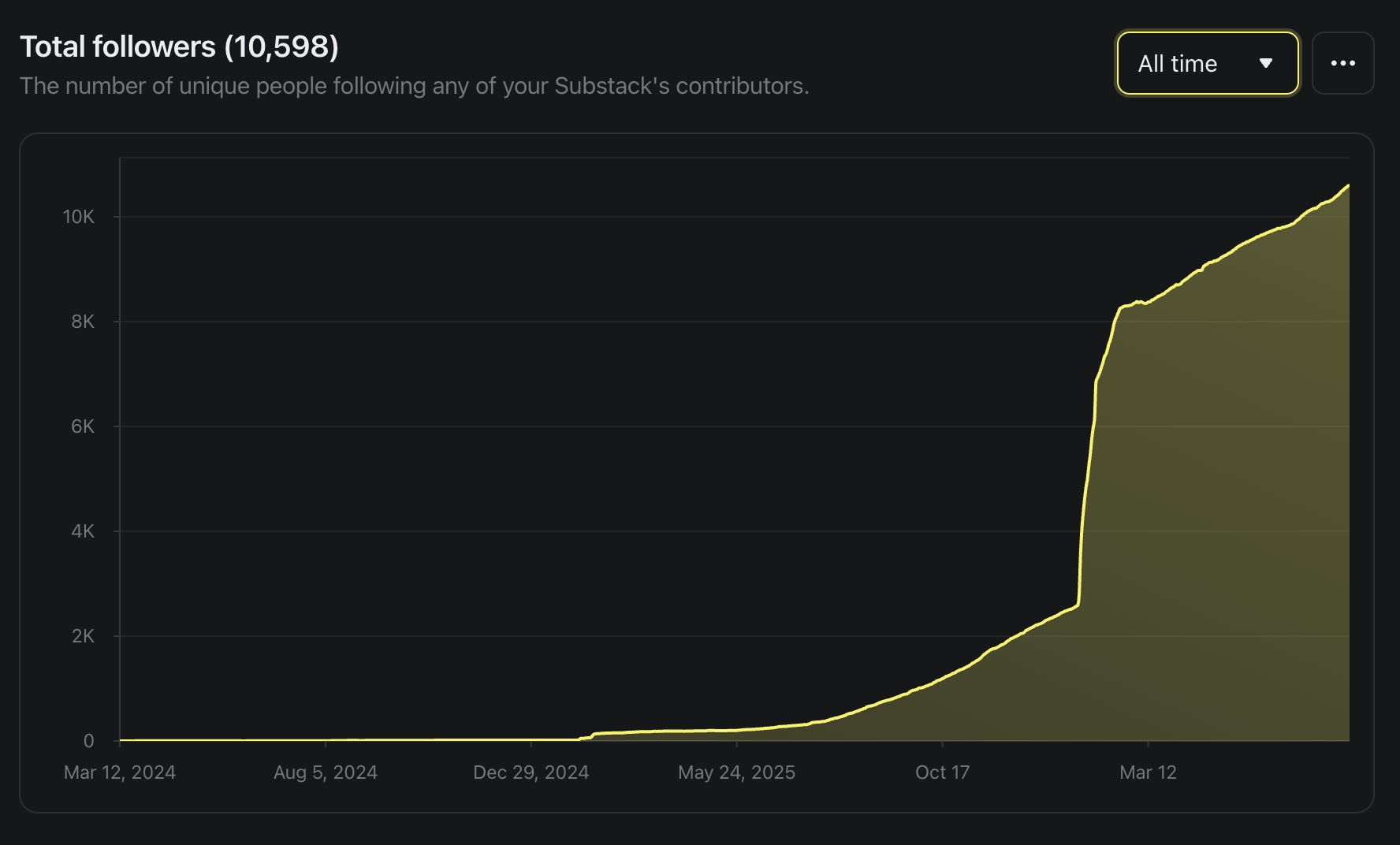
I have grown a social following of +80,000 people across platforms over the last two and a half years, but the single most valuable assets I have after all of that work are the 2,250 people of the 6,000 total subscribers on my Substack that open every single article I write and every single offer I make.
Substack also allows creators to export their subscriber lists.
But email begins after discovery.
Before someone can subscribe, they must first encounter the creator. Then they must understand the creator’s value. Then they must develop enough interest or trust to invite that creator into their inbox.
A traditional newsletter platform helps you communicate with the people you already have. A media network helps you find the people you do not have yet.
That is the strategic difference between Substack and infrastructure-first alternatives such as Kit or Beehiiv.
Those platforms may offer better economics, customization, advertising products, or operational control for certain publishers. Substack’s differentiated value is the network surrounding the publishing software. The larger that aggregate market becomes, the more differentiated value is created for all Substack creators.
Substack says its network, anchored by recommendations and the app, now produces more than half of all subscriptions and 30% of paid subscriptions on the platform. In February 2024, it reported that the network was already driving 50% of new subscriptions and 25% of new paid subscriptions.
That reality has certainly held for me. While I arrived at Substack with a following of +25,000 on LinkedIn (now +40,000) and an old email list from that effort, I chose to start from zero and not upload any prior accumulation of email addresses into. I came to Substack because I wanted the network effects, and so I wanted to understand what it meant to grow organically. Here’s what that has looked like for me.
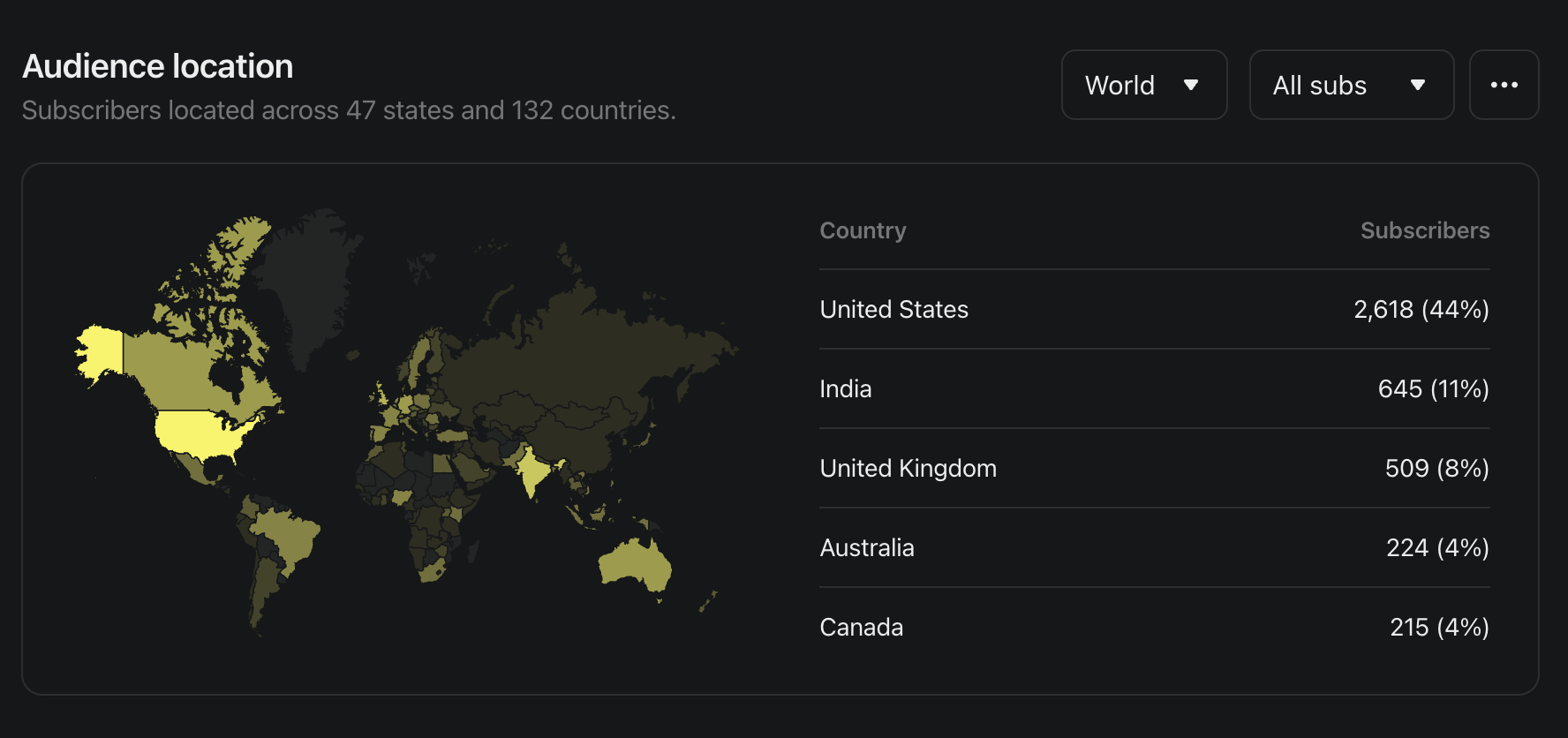
The feed is the customer-acquisition engine for the newsletter.
Without Notes, recommendations, follows, profiles, search, Lives, video, clips, and algorithmic distribution, Substack is just an email service with payment processing and fails to deliver the mechanisms that have created so much opportunity for its community of creators.
In order for our collective opportunity to grow, Substack needs a large geography to direct their machinery against. In the absence of more consuming eyeballs and creating platform members, Substack fails, our new businesses fail, and we move on to the next thing.
Now let’s talk about the difference between social media and interesting media…
TikTok’s real innovation was not short video
TikTok changed media distribution because it reduced the importance of the social graph. Older social platforms began by asking:
Who are your friends?
Whom do you follow?
Which accounts have you already chosen?
TikTok began with a different question:
What are you likely to care about?
Its For You system learns from behavior such as what a person watches, finishes, skips, likes, shares, searches for, or marks as uninteresting.
TikTok has said that follower count and a creator’s previous viral success are not direct ranking factors in its recommendation system. The objective is to match an individual item with people likely to value it, including people who have never encountered its creator before. TikTok’s explanation is here.
This is how they invented the Interest Graph that has become the underpinning for what all social algorithms are being engineered to achieve across all the social media platforms.
The old feed asked:
What did the people you follow publish?
The new feed asks:
Of everything published, what are you most likely to care about?
The rest of the industry has followed.
YouTube says recommendations generate more viewing than subscriptions or search.
Meta explicitly describes Facebook’s future as “social discovery” and uses AI to recommend content from accounts people do not follow.
LinkedIn’s researchers describe retrieving out-of-network posts based on a member’s topical interests, narrowing hundreds of millions of possible posts to roughly 2,000 candidates.
This is not an isolated product trend.
It is the migration from social media to interest media.
Substack must find the voice
Substack should not simply copy TikTok. TikTok is primarily trying to identify the next video someone will watch. Substack must answer a more valuable question:
Which creator, publication, perspective, or body of work might this reader value repeatedly?
TikTok finds a single video, a single, often disposable piece of content.
Substack must find the voices that their platform member would most likely want to consume multiple pieces of content from.
That requires an interest graph built for ideas and expertise.
It should understand what a creator writes and speaks about across an entire archive. It should understand the subjects readers identify in their profiles, the publications they return to, the Notes they save, the Lives they attend, the writers they follow, the subscriptions they purchase, and the subscriptions they retain.
It should then connect and direct those signals to drive a more valuable content consumption experience for the user, and it should provide the creator on the other side with as much clarity as possible for what pieces of content drove that new post engagement, follow choice, subscription click, and paid commitment.
A reader who repeatedly engages with organizational psychology, AI, leadership, and company operations should be able to discover a new writer working at that exact intersection, even if the writer has 300 followers rather than 300,000.
That is the promise of the interest graph.
More creators entering the platform does increase competition.
But it also gives the platform more ideas, more expertise, more behavior, and more potential matches from which to learn.
Growth creates crowding, yes, but it also creates richer discovery.
Following should be a signal, not an entitlement
The critics would be right if Substack’s future were simply a larger follower hierarchy. If the biggest accounts automatically receive the most distribution, early incumbents will own the feed.
Follower counts will become status markers.
Frequency will defeat substance.
Outrage will defeat expertise.
New creators will technically be allowed to publish but structurally prevented from being discovered.
That is not the social platform Substack should build.
Substack describes following as a lighter-weight way for readers to get to know a creator before committing to a subscription. That is exactly how following should work. A follow should help the platform understand that a particular reader may value a particular creator.
A creator’s total follower count should not grant permanent ownership of everyone else’s attention.
Following should be an input into relevance, not a deed to the feed.
Each Note, essay, podcast, clip, and Live should still have to earn distribution by being useful to the people receiving it.
I find that many of my most successful notes drive plenty of engagement and new followers, but not any new subscribers. Here’s an illustration:
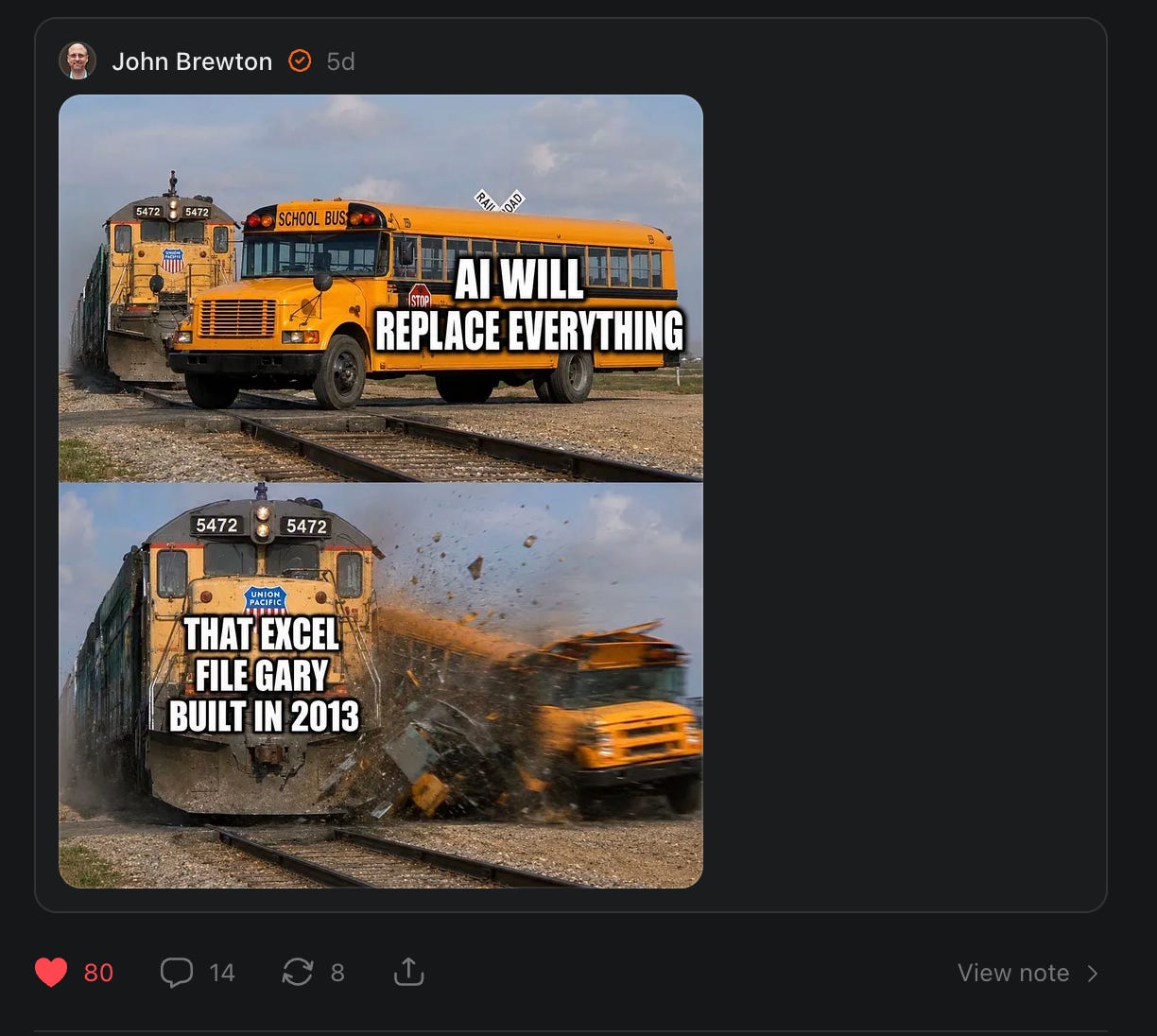
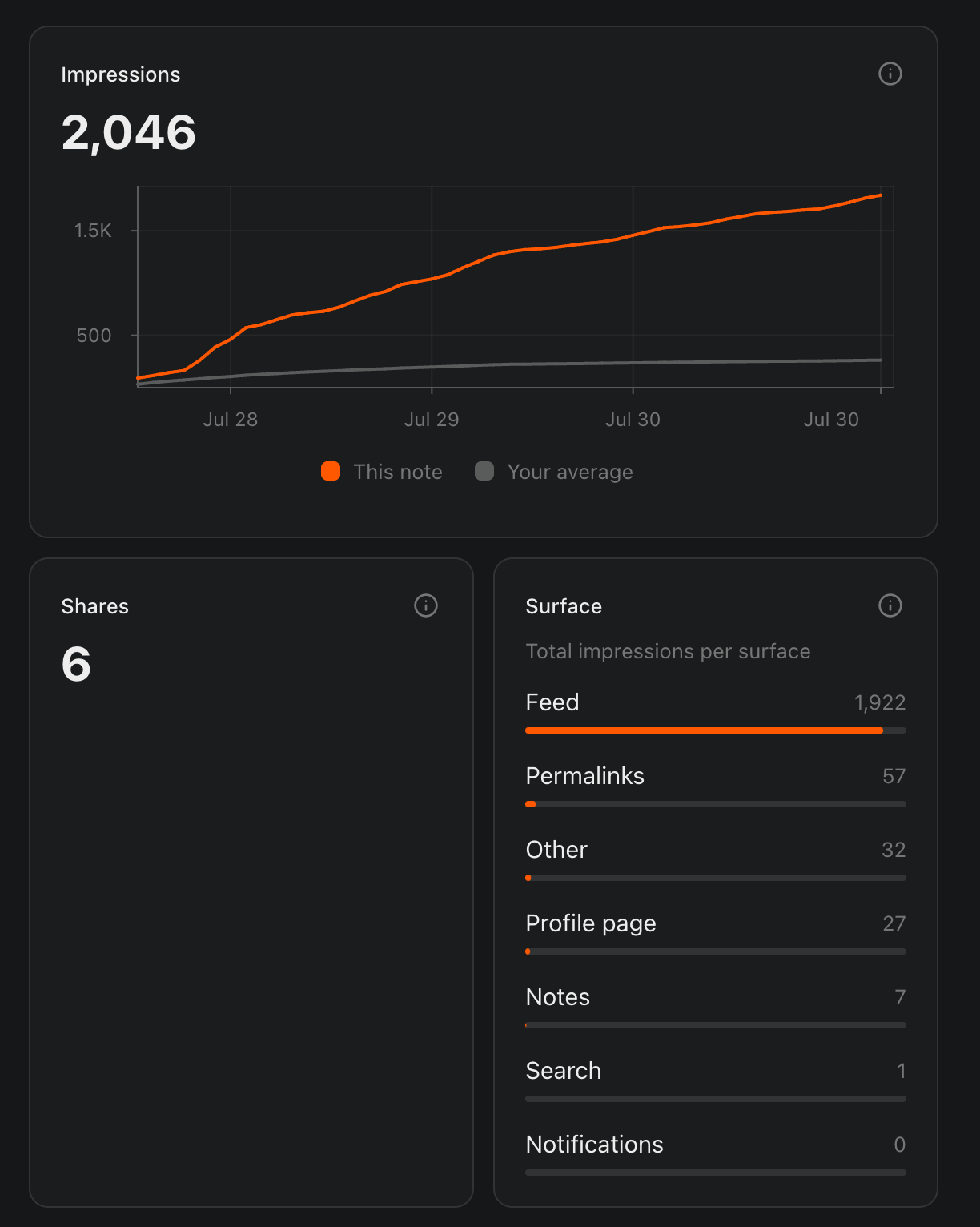
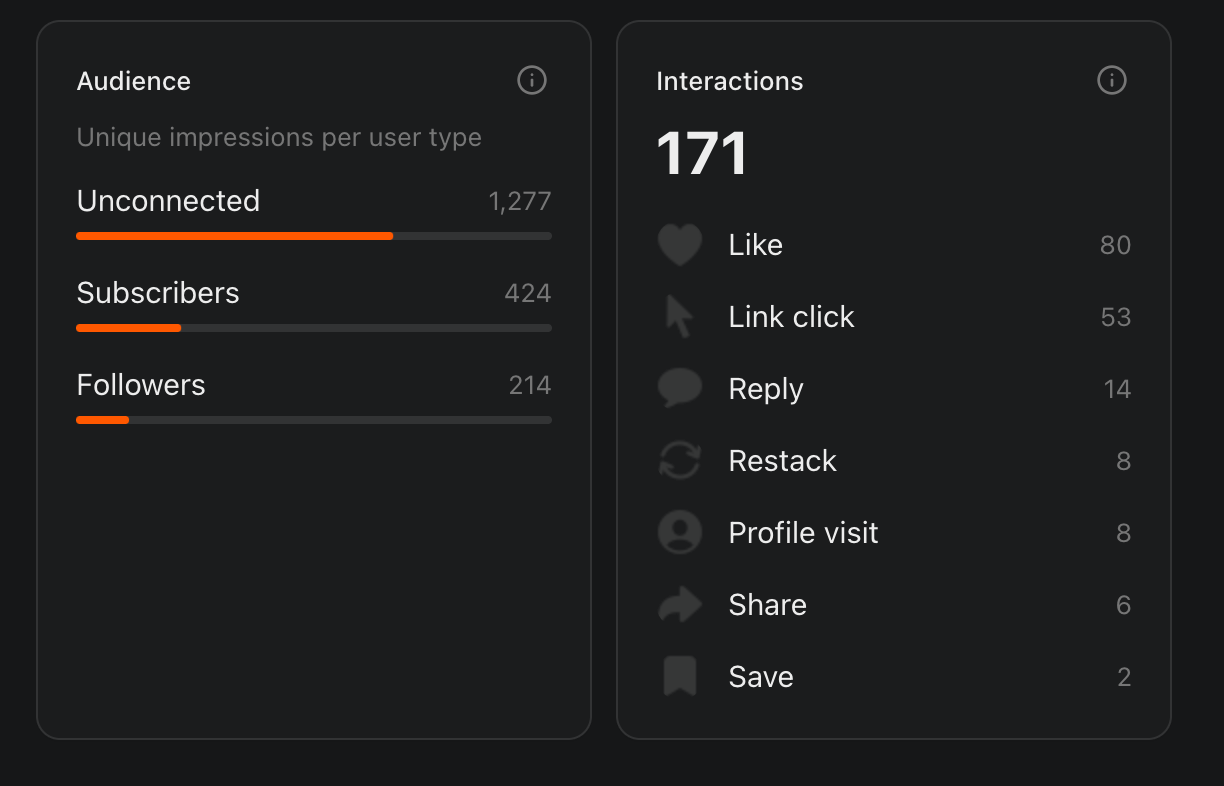
In terms of engagement, this was my best-performing note from the last seven days. It did not drive a single new subscriber, but it did add quite new followers. I wouldn’t expect this note to have driven new subscribers. It was simply a funny picture, but it did introduce my work to 1,277 new Substackers via the feed. As the platform grows, that 1,277 will become 12,777, the number of followers a note like this drives will be greater, and ultimately the number of conversions from followers to free subscribers, and yes, to paid, will grow. That only happens if Substack continues to mature into a full-fledged social media platform. My biggest growth spurt of new free and paid subscribers (the period that made me a best seller) started with the outperforming success of two notes that led to 27 of my articles 5x-ing their total views over a period of several weeks.
Substack should normalize performance for creator size, test work with appropriately matched audiences, and reserve meaningful discovery capacity for smaller and unfamiliar publications. The point is not to penalize large creators. It is to prevent accumulated popularity from replacing present-tense relevance.
Optimize for relationships, not reactions
Substack also has an economic advantage that TikTok, Instagram, and X do not.
Its subscription-centered business model benefits when a reader establishes a durable financial relationship with a creator. (Substack)
Its recommendation system should therefore optimize beyond likes, comments, restacks, and time spent.
It should ask:
Did the reader visit the publication?
Did they follow?
Did they become a free subscriber?
Did they become a paid subscriber?
Did they remain subscribed after 30, 90, or 365 days?
Did they return to the archive or attend another Live?
A Note that receives 20,000 likes but produces almost no subscribers may be less valuable to the Substack ecosystem than one that receives 300 likes, generates 75 free subscribers, creates 12 paid subscribers, and retains ten of them a year later.
To create the media business all of us are talking about, first, we need platform activity, interest from a growing audience, and a real distribution mechanism underpinning our content.
Notes is customer-acquisition work when it introduces a creator to relevant readers and turns some of that attention into relationships the creator can retain.
It becomes uncompensated platform labor when it merely keeps the feed active, improves Substack’s engagement numbers, and leaves the creator with little more than another vanity metric inside the platform.
This is so critically important. If you expect the Substack platform to deliver new free subscribers, much less paid subscribers, to your publication each week, then all of those users need to have a feed they can’t wait to get back to as their reason for opening the application and potentially discovering your work.
Creators should demand better attribution, not less discovery.
They should be able to see which Notes generate profile visits, which follows become subscriptions, which Lives create paid conversions, which topics introduce them to new interest communities, and which acquisition channels produce durable readers rather than rapid churn.
The quality of the analytics is, in my opinion, maybe the biggest opportunity the Substack team has to increase value for their creators, keep them on their platform long term, and continue to attract the new and best creator names on the planet. Substack needs to show their creators how to better monetize their publications from every possible angle in their sales funnel.
Do not ask Substack to remain small
Substack was never going to remain a quiet neighborhood of early writers, unusually high conversion rates, and limited competition.
Nor should it.
Creators should not ask Substack to freeze the advantages of its earliest years.
They should ask it to become the best interest-based media network in the world.
That means a platform where an unknown writer can reach a reader because the work is relevant, not because the writer is already famous.
It means using Notes, Lives, recommendations, video, and following to create subscriptions rather than replace them.
It means treating follower count as a clue, not a governing currency.
And it means converting algorithmic discovery into direct, durable relationships that creators can actually build businesses around.
Substack becoming a giant social platform is not the threat.
Becoming the wrong kind of giant social platform is.
The feed is not the enemy.
The wrong algorithm is.
- j -
Do you want some help building your newsletter or creator business?
Become an Operating Founder, receive a 60-minute review of your content, business, and strategy, and join my weekly Operating Founder Office Hours, where I answer any and all of your questions and share what I’m working on and learning from building my business.
Here’s everything you need to know about the business I have built so far.
About John

John Brewton documents the history and future of operating companies at Operating by John Brewton. He is a graduate of Harvard University and began his career as a PhD student in economics at the University of Chicago. After selling his family’s B2B industrial distribution company in 2021, he has been helping business owners, founders, and investors optimize their operations ever since. He is the founder of Operating by John Brewton and conducts advisory and consulting work for global companies, asking the question: What is the future of companies?
Appendix: Sources and evidence
The current creator debate
Substack’s scale and discovery network
The shift toward interest-based distribution
Evidence limitations
Substack has not publicly disclosed comprehensive platform-wide churn data, detailed cohort conversion rates, or the full ranking logic governing Notes and recommended posts. The latest official paid-subscription milestone I could verify is the five-million announcement from March 2025. There is also no public evidence resolving whether Substack’s recommendation system systematically favors or disadvantages paywalled posts.
Platforms inevitably go through different phases and cycles.
I think the most vocal complainers about Substack’s changes are those who profited from an earlier approach that no longer works.
But change is inevitable, and you have to continuously reinvent yourself, your content, and your business model if you want to keep pace.
As you say, John, that’s a feature, not a bug
Totally agree John. Substack decided to become a social network, so now there's no way back. And the only way for a social network is up: it needs to be large. Grow.
My real concern is how do we stop it from enshitifying the user experience, once it gets big, like all other social networks did.