

How to Build an AI Operating Team in Grok Bot: The Field Manual
AI Was Supposed to Kill Consulting. Instead It Has Started a Golden Age.
The Quiet Builders Are Coming. Great Companies Will Build Around Them.
Start Here
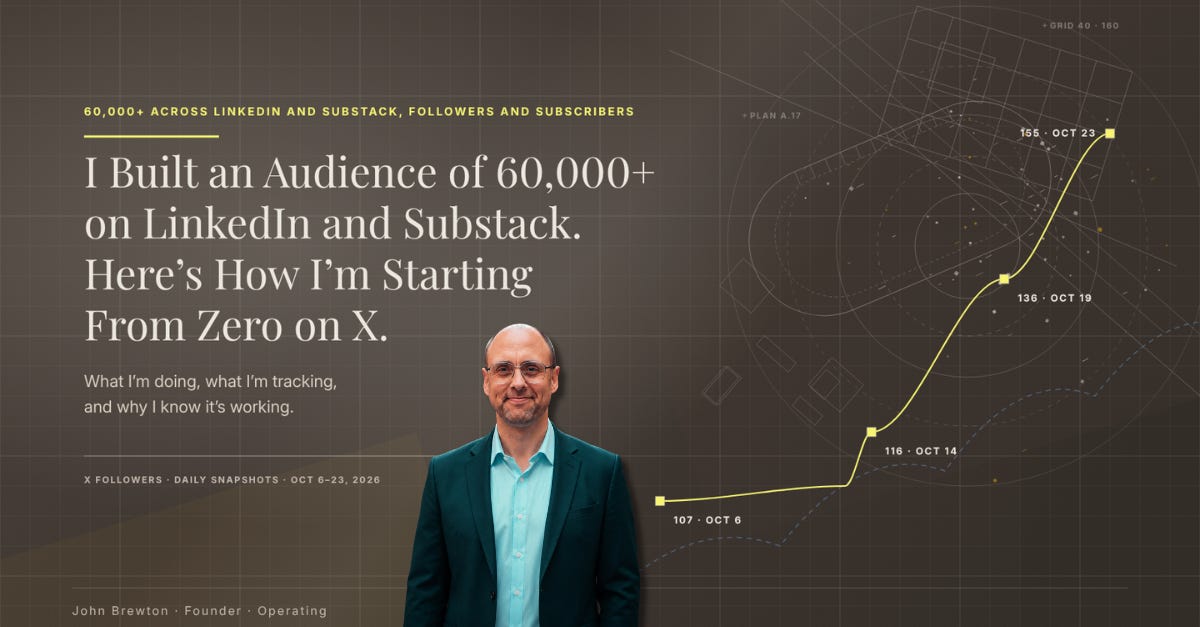
On LinkedIn, 44,900 people follow me. On Substack, I have about 6,000 subscribers (over 200 paid) and 12,000 followers. Cumulatively across my primary platforms, that is an audience of +60,000 across LinkedIn and Substack, followers and subscribers. On X, 107 people followed me when I started taking it seriously on Oct 6. This morning, 155 are following along.
That last number might be small but I know the strategy is right. To explain why, I need to start with how I built the other two audiences. In this article, I want to explain how I’m building the strategy to start from zero on a new platform using everything I’ve learned over the last 2.5 years building my large audience.
How I built my LinkedIn following
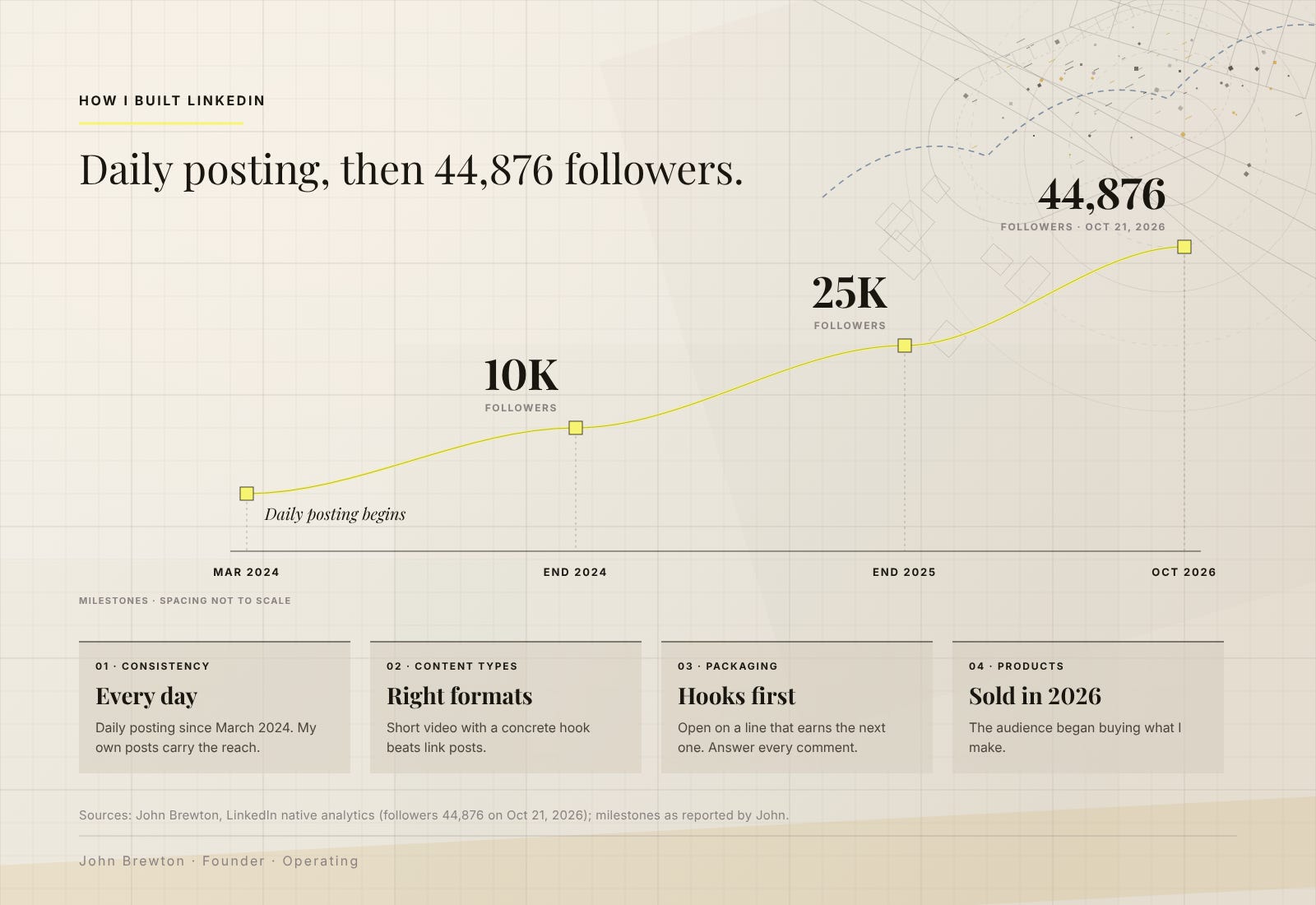
I started posting on LinkedIn every day in March 2024. By the end of 2024, I had 10,000 followers. By the end of 2025, I had 25,000. Four things did the work: consistency, the right content types, packaging and hooks, and, in 2026, products people could buy. This year I sold three course cohorts through LinkedIn, at $1,500 to $2,500 a seat, plus coaching packages.
LinkedIn is where my largest audience lives. My profile had 44,156 followers on Oct 6 and 44,876 on Oct 21, a gain of 720 in about two weeks. In the week to Oct 6, my posts drew about 31,500 impressions, with engagement of about 3.3%.
The approach is simple to describe. My own posts drive the reach, and I reply to every comment. A post that opened “Your ambition isn’t shrinking. You’re changing who you’re building for.” reached 14,628 impressions and drew 255 engagements. I answered its 18 comments one by one. Across my whole profile, there were 322 comments from Oct 16 to Oct 22. On my company page, short video clips with a concrete hook beat link posts.
LinkedIn also feeds the newsletter. It has brought in 951 Substack sign-ups all time, about 11% of the total. The lesson I took from it is that the conversation after a post matters as much as the post. People decide whether you are worth knowing in the replies.
How I built my Best-Selling Substack audience
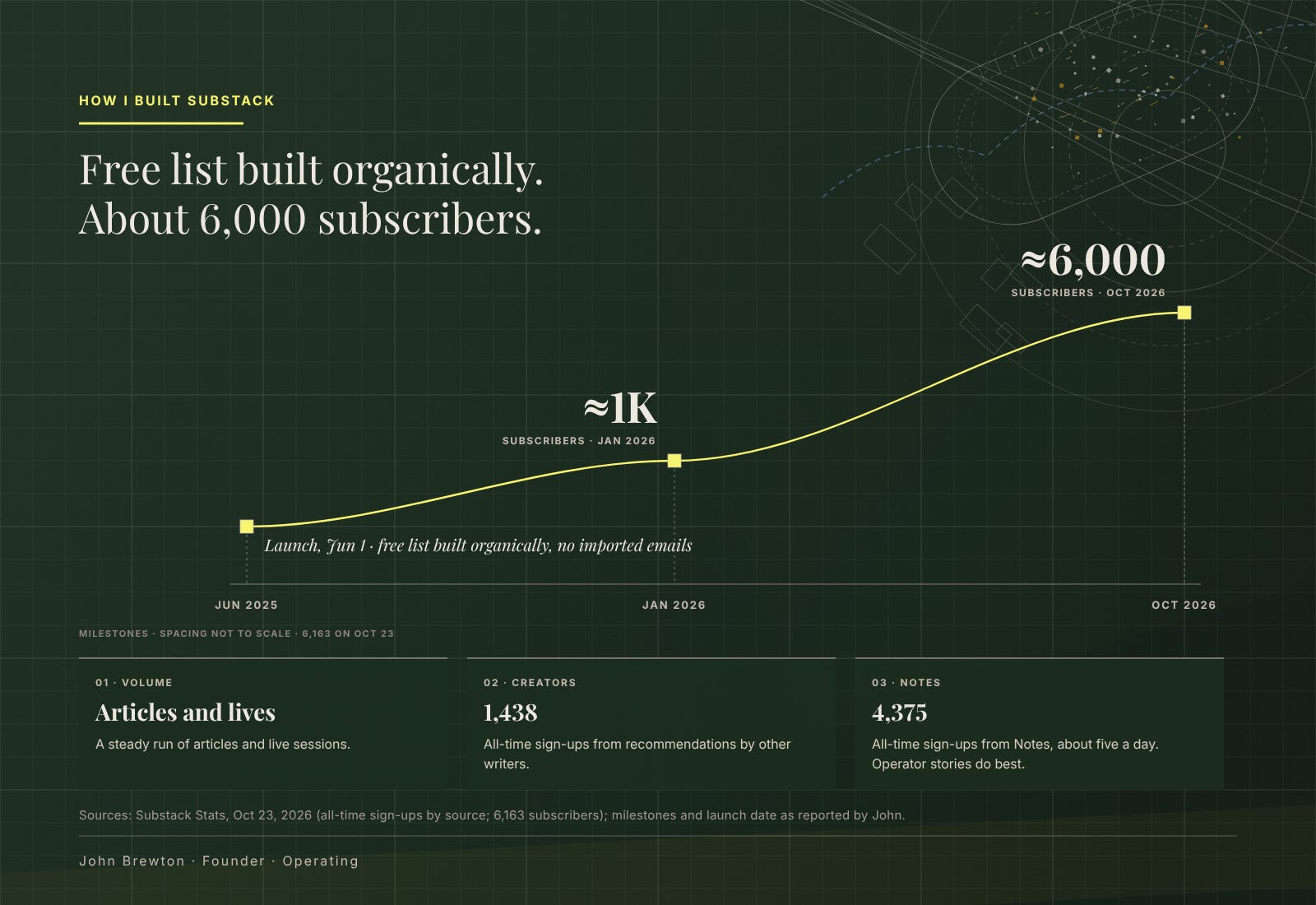
I launched the newsletter in earnest on June 1, 2025, and built the free list organically, with no imported emails. It reached about 1,000 subscribers by January 2026 and about 6,000 now, over 200 of them paid. I also have 12,000 followers on Substack. Substack Stats shows 6,163 subscribers, paid included. Over its life, the newsletter has recorded 8,663 sign-ups by source: Notes 4,375, Direct to App 1,552, recommendations from other writers 1,438, LinkedIn 951 and direct traffic 347. By Substack’s own count, 68.84% of all-time sign-ups, or 6,576, came from the Substack network.
In other words, Substack grew mostly inside Substack. Three things drove it. Volume: a steady run of articles and live sessions. Relationships with other creators, whose recommendations account for 1,438 sign-ups. And Notes. I write about five a day. Operator stories do best, at 15 to 19 likes. News Notes with link cards draw three to 10.
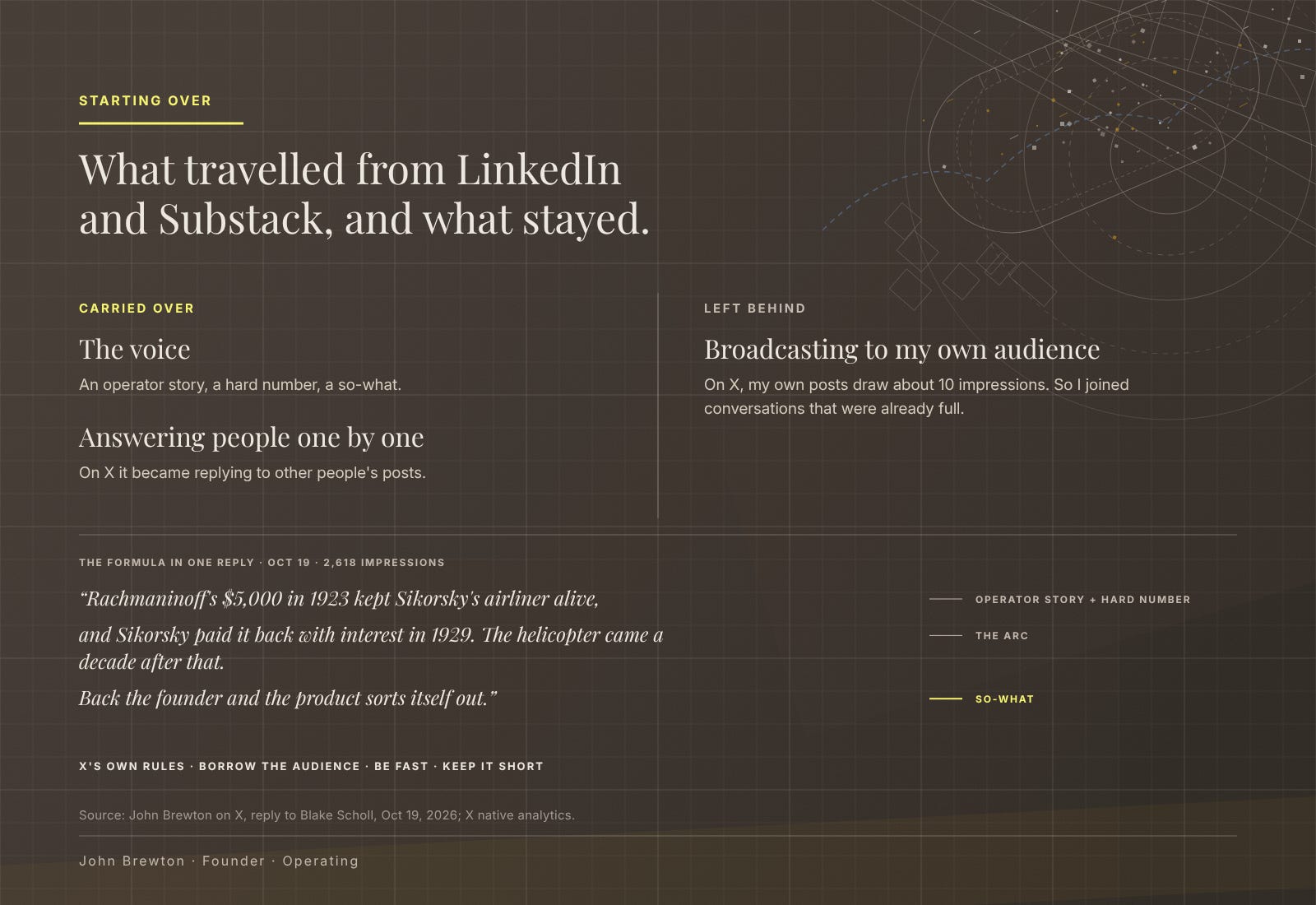
Two lessons from those platforms shaped what I did next. Write in one recognisable voice: an operator story, a hard number and a so-what. And answer people, one at a time.
Starting over on X
A big audience elsewhere gives you a voice and habits. It gives you no reach. On X, I was a stranger in an empty room.
The voice carried over. So did the habit of answering people, which on X became replying to other people’s posts. What did not carry over was broadcasting to my own audience. On LinkedIn and Substack, people are waiting to read what I post. On X, they weren’t, and my own posts there draw about 10 impressions each.
X has its own rules, and three matter most. Borrow other people’s audiences: the conversation under a large account’s post is already full of readers. Be fast: replying early to big accounts wins. Keep it short: two or three sentences, one fact the thread lacks, ending on the point.
From 107 to 155
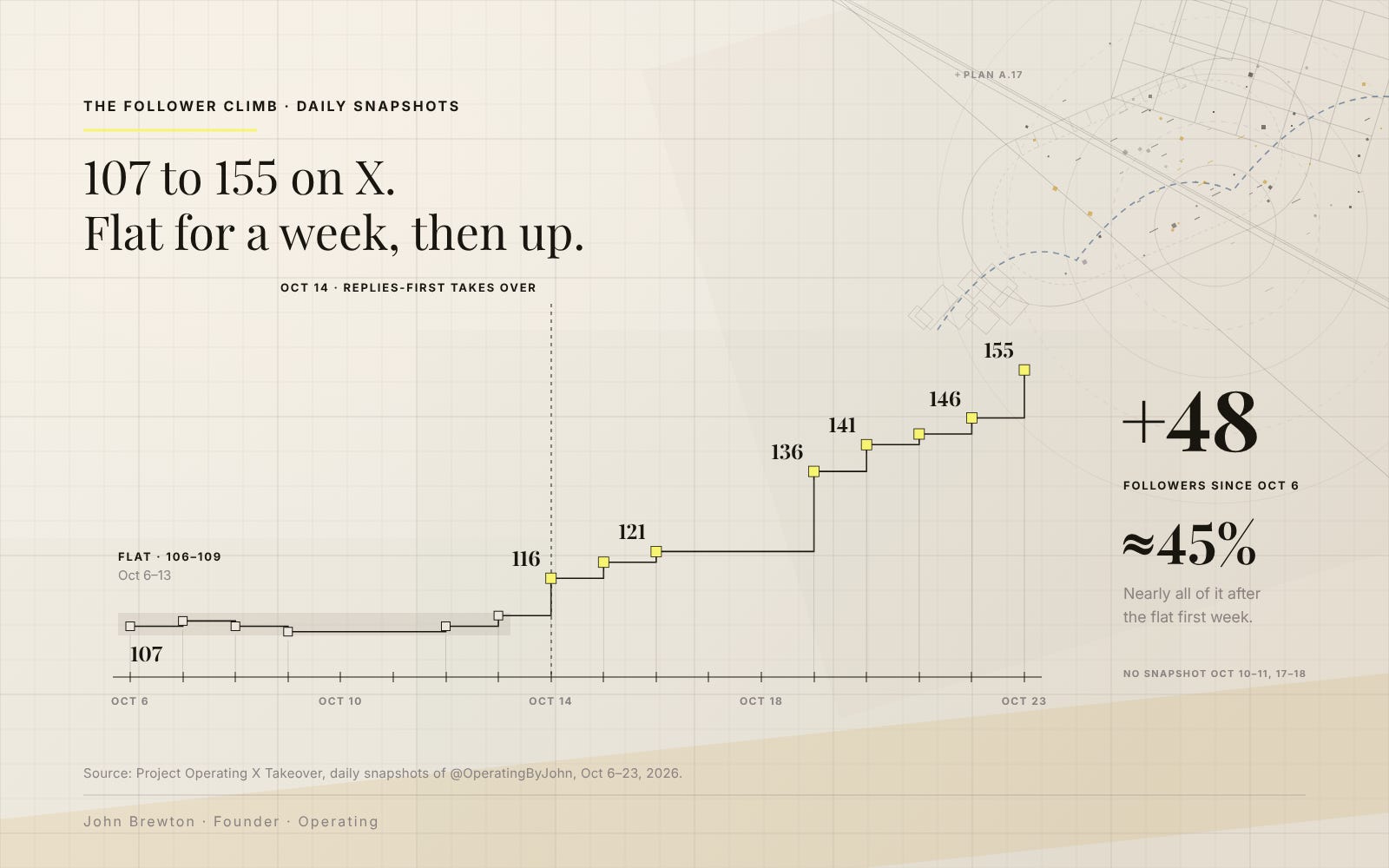
On Oct 6, I started replying on X. For the first week, almost nothing happened. My follower count sat between 106 and 109. Impressions moved first: on Oct 12, my average impressions per post, replies included, jumped from about 3 to 41. By Oct 14, replies had taken over, and followers took off: 116 on Oct 14, 121 on Oct 16, 136 on Oct 19, 141 on Oct 20, 146 on Oct 22 and 155 at 5:44 AM this morning. That is about 45% growth since Oct 6, nearly all of it in the past 10 days.
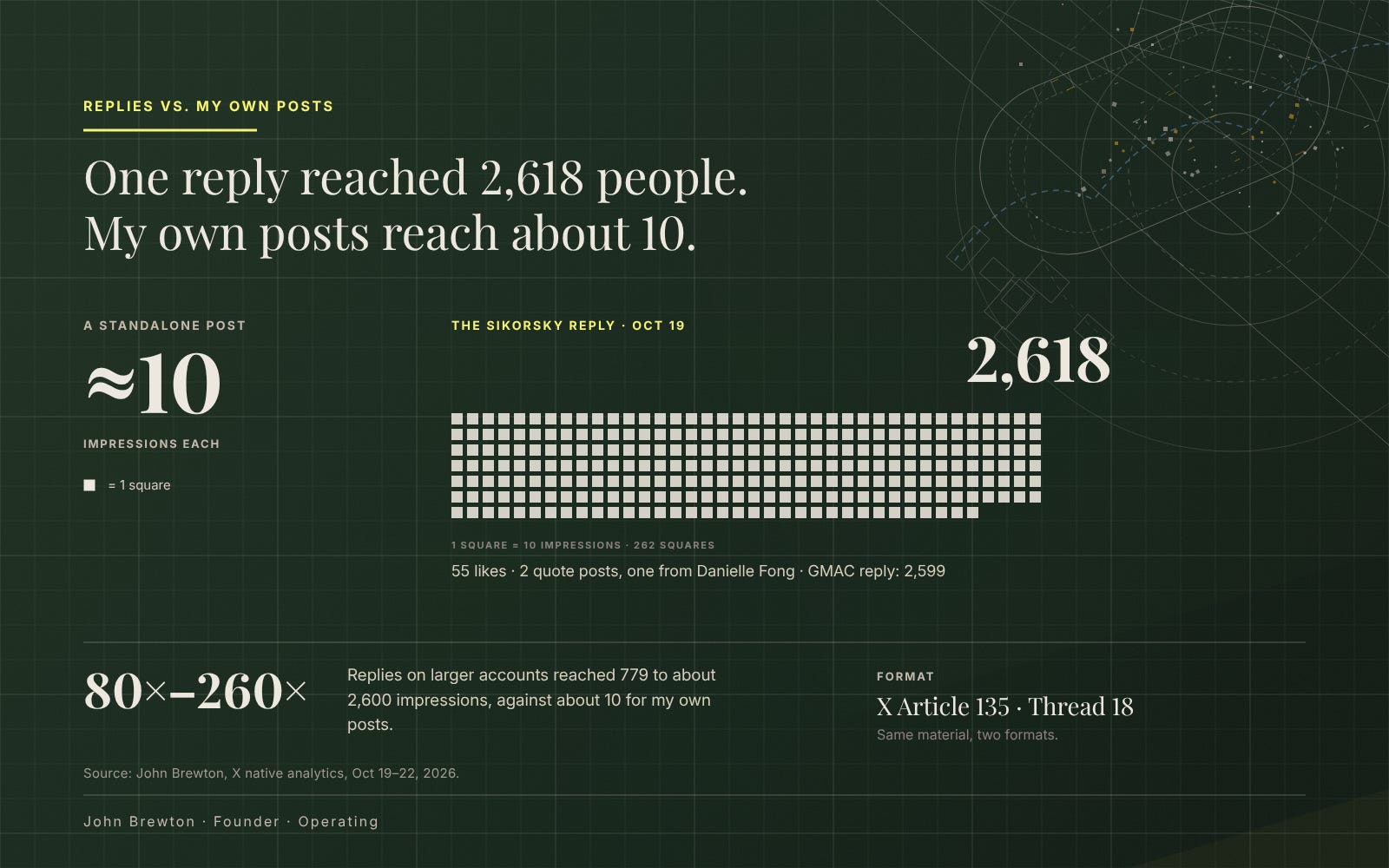
The best reply came on Oct 19, under a post from Blake Scholl: “Rachmaninoff’s $5,000 in 1923 kept Sikorsky’s airliner alive, and Sikorsky paid it back with interest in 1929. The helicopter came a decade after that. Back the founder and the product sorts itself out.” It drew 262 impressions on its first day, then kept going, to 2,618 impressions, 55 likes and two quote posts, one from Danielle Fong. It is my most-liked reply ever, and it is the LinkedIn formula in three sentences.
Earlier that day, 27 minutes after @unusual_whales posted about car loans stretching past seven years, I replied: “GM started GMAC in 1919 so families could buy a car before they’d saved for it. A century later the loan outlasts the warranty.” It has drawn 2,599 impressions. On Oct 22, a two-sentence reply under a Polymarket post about SpaceX and cell towers reached 1,024.
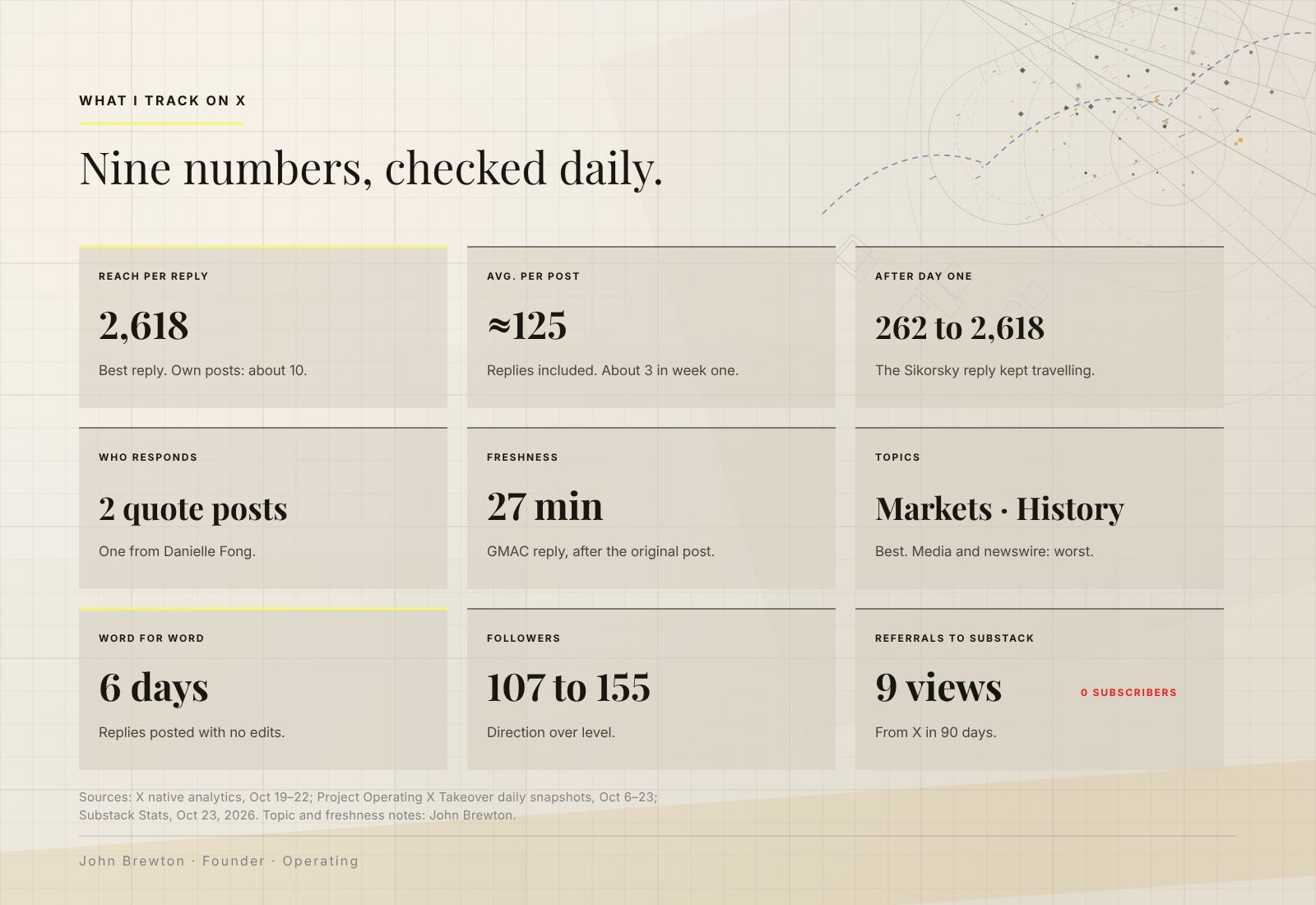
What I track
I keep the list short and check it every day.
Reach per reply against reach per post: Replies on larger accounts reach 779 to about 2,600 people, roughly 80 to 260 times my own posts.
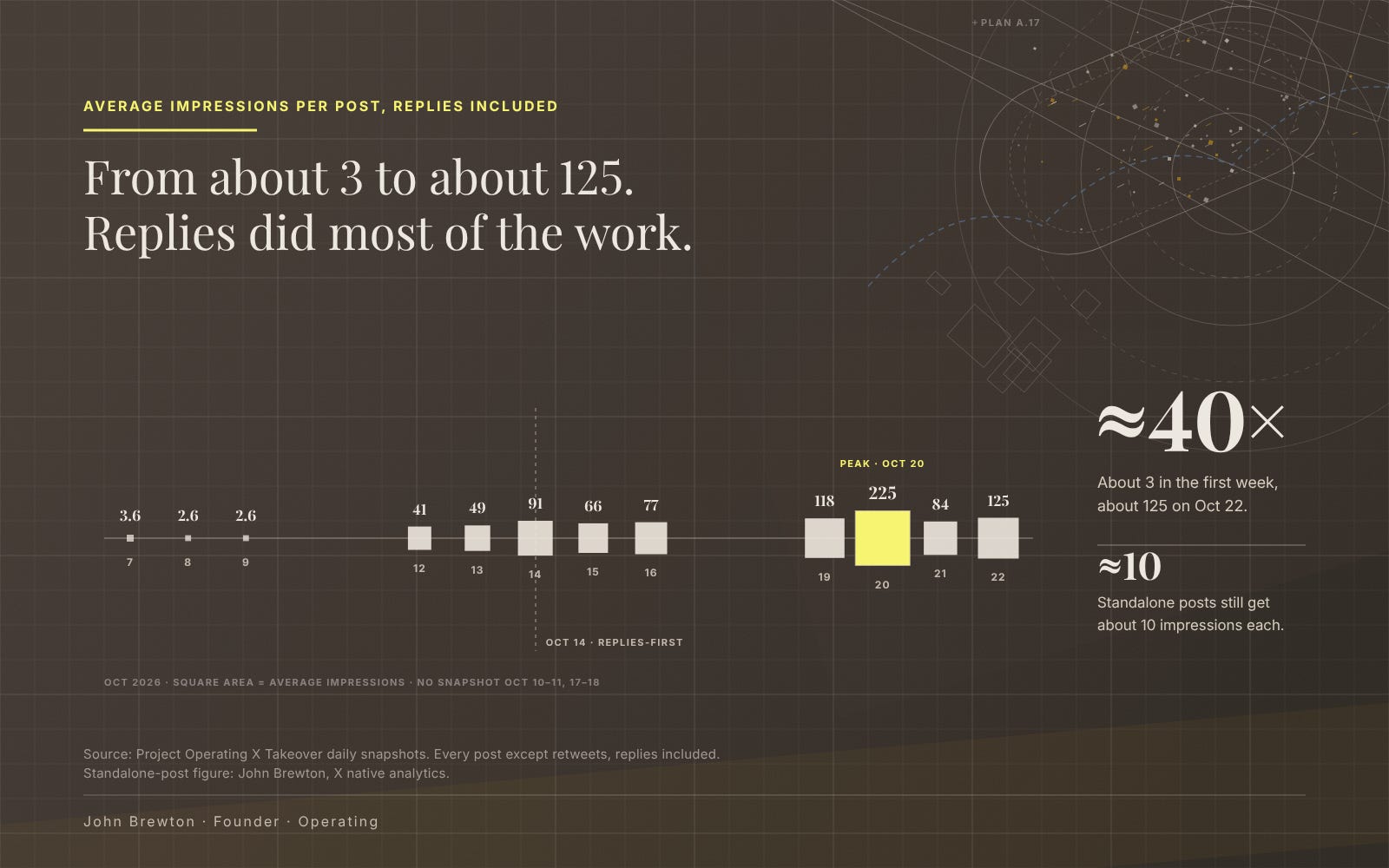
Average impressions per post, replies included, from daily snapshots: This counts everything except retweets. It rose from about 3 on Oct 7–9 to about 125 on Oct 22, peaking at 225 on Oct 20, roughly 40 times the first week. Replies did most of that work. My standalone posts still get about 10 impressions each.
What happens after day one: A reply that grows from 262 impressions to 2,618 is still being shown to people days later.
Who responds: I note who replies, quote-posts or follows back. A quote post from someone with their own following, such as Danielle Fong, carries me into a room I couldn't have entered alone.
How fresh the post is: Replying fast to big accounts wins. The GMAC reply went up 27 minutes after the original.
Which topics land: Markets and business history do best. Media and newswire accounts do worst.
Word for word or edited: Software agents draft reply options. I choose, edit or reject them, and nothing posts without my approval. For six days running, every reply went out word for word. That tells me the drafts now sound like me.
Format, followers and referrals: A native X Article drew 135 impressions; the same material as a thread drew 18. I watch followers for direction more than level. And in 90 days, X sent my newsletter nine views and zero subscribers. I track that to stay honest.
Why I know it is working
Four signals point the same way. The gap between replies and posts is wide and consistent across accounts and subjects, which makes luck an unlikely explanation. The best replies keep gaining reach after the first day. People with real audiences have started to quote me. And the follower count, flat for a week, turned upward once the replies began to land.
Side by side
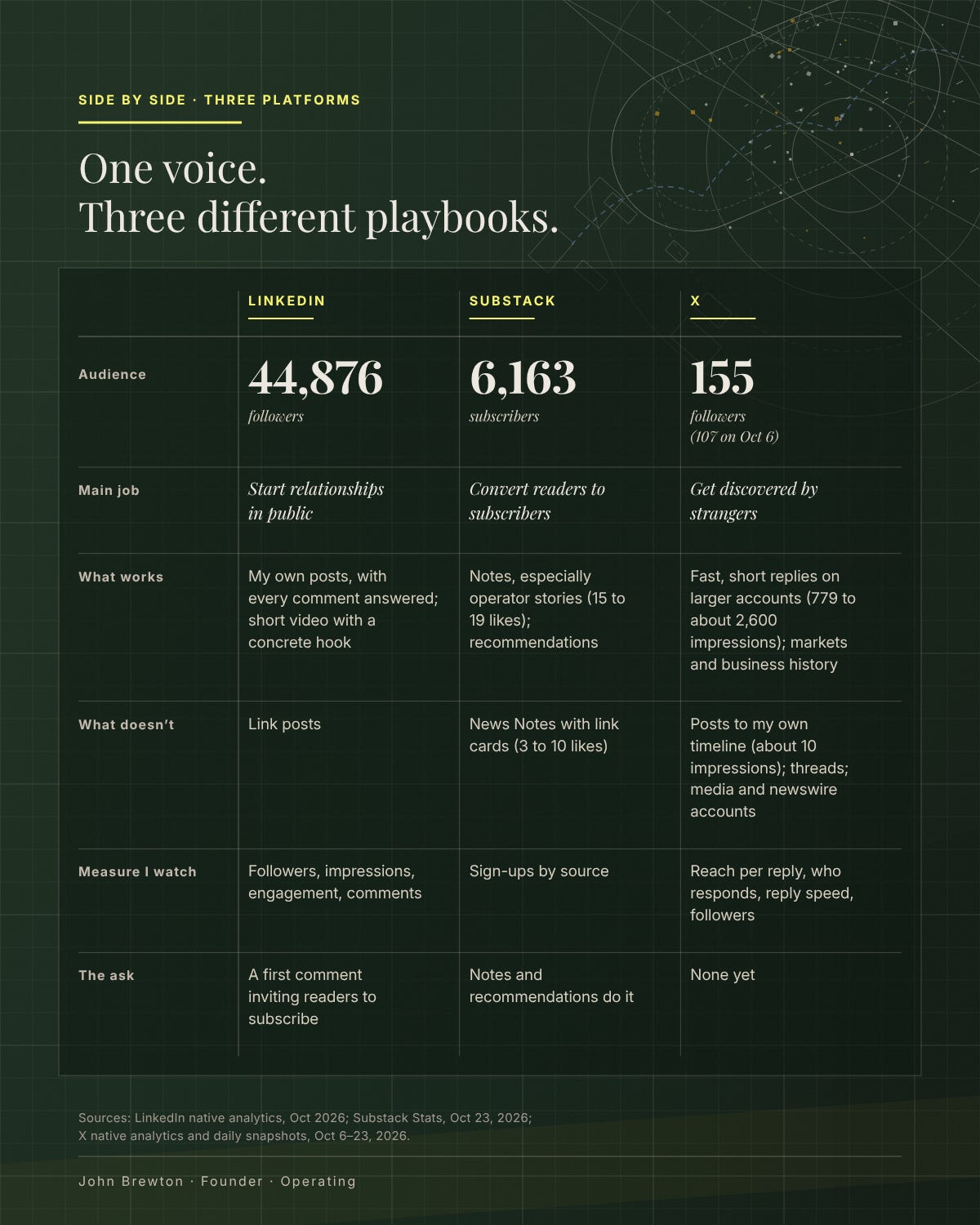
The voice is the same in all three columns. The tactics differ because each platform rewards different behavior. X drives discovery. Notes do the converting. LinkedIn is where relationships start in public.
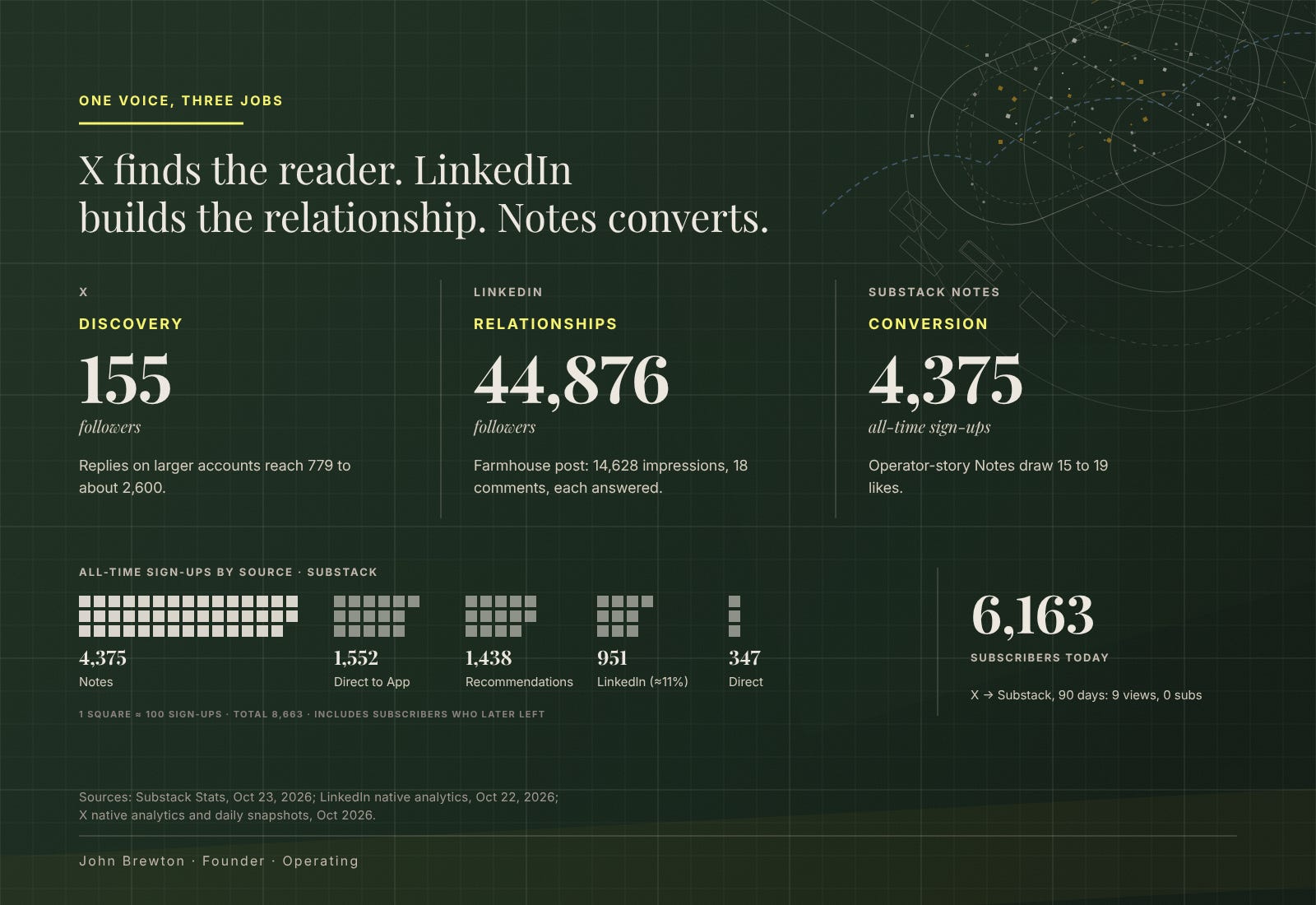
Why small numbers can be the right numbers
If my goal were to import my LinkedIn following, 155 would be disappointing. My goal on X is an audience native to X, and every number that matters is small and rising.
Small positive numbers are useful because they are cheap to read. A reply that reaches 2,618 people costs me a few minutes. If the strategy were wrong, I would see it within days: replies stalling at 10 impressions, no quote posts, a follower count stuck at 107. Instead, reach per reply is many times reach per post, the best replies keep traveling, and the count has moved from 107 to 155.
The tempting mistake is to judge a new platform by an old platform’s scoreboard. Measured by subscriptions, X has given me nothing in 90 days. Measured by whether strangers are meeting my work, it has given me thousands of impressions on a handful of sentences. The first view would have me quit. The second tells me to keep going and be patient about conversion.
The kicker
Starting over is humbling when you have a big audience somewhere else. It is also clarifying. With no crowd to broadcast to, the only way in is to be useful in someone else’s conversation, quickly, in a few sentences.
The voice I built on LinkedIn and Substack made the replies worth reading. The habits X demanded — speed, brevity, and borrowed rooms — got them seen. The numbers are small. They point in the right direction, and at this stage, that is what I need from them.
- j -

John Brewton documents the history and future of operating companies at Operating by John Brewton. He is a graduate of Harvard University and began his career as a PhD student in economics at the University of Chicago. Since selling his family’s B2B industrial distribution company in 2021, he has been helping business owners, founders, and investors optimize their operations.