

Hello Operators!
The sale on Operating ends tomorrow night, Monday, Nov 30, at 11:59 PM ET. I want to show you what a year of the writing actually covered, what a session with me looks like, and how three different people, with different needs could benefit from the Operating Project if you take one of the three seats.
What We Covered In One Year
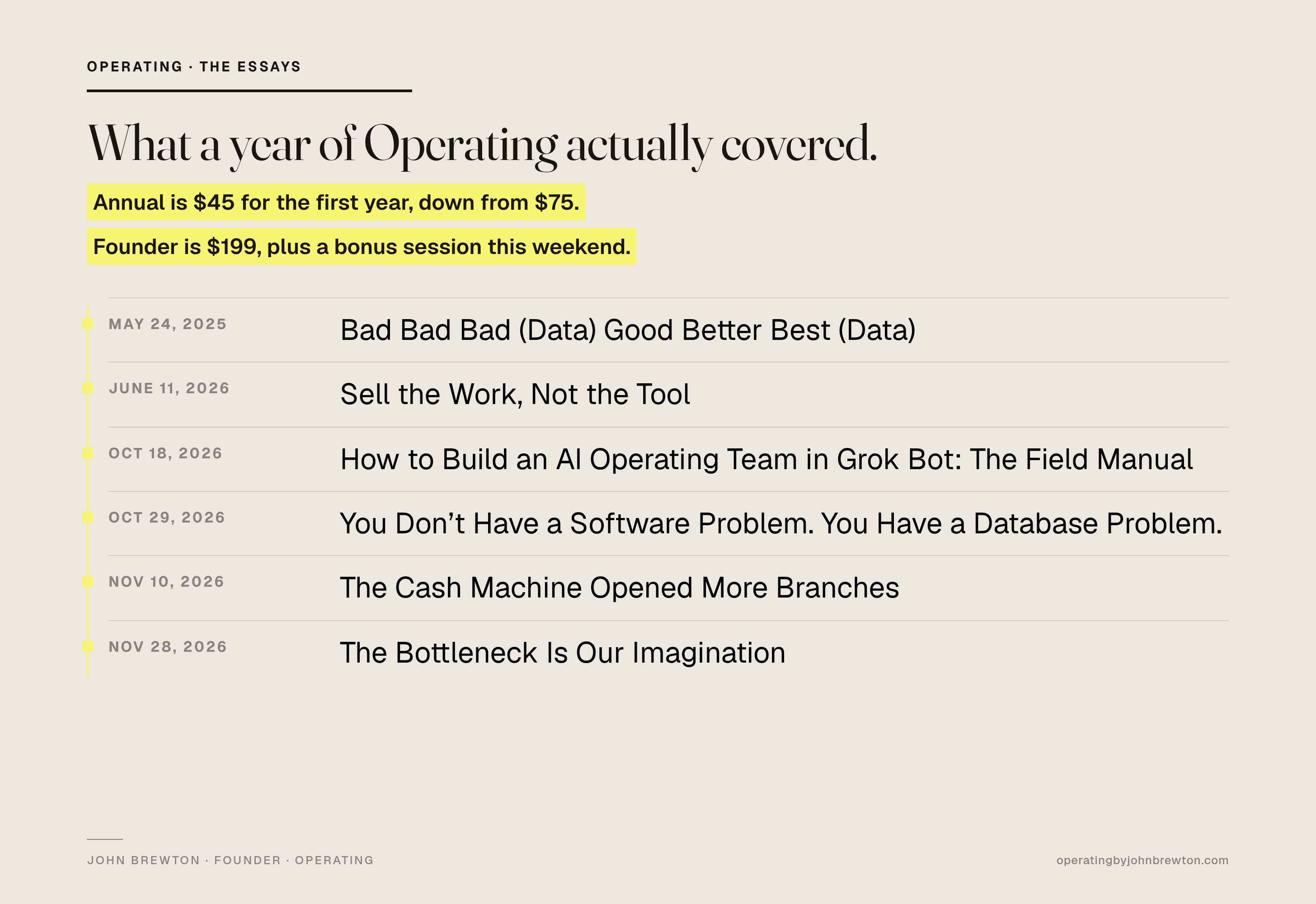

I published The Bottleneck Is Our Imagination yesterday. Forecasts of what AI will do to work keep counting the jobs it can take. They leave out the industries, the new demand, and the businesses it will create. A century of creative destruction says we should expect that second list. The constraint I keep coming back to is how little imagination we bring to it.

Earlier in November I wrote The Cash Machine Opened More Branches. When ATMs arrived in large numbers, the average urban branch went from 20 tellers to 13. Banks opened more branches because each one was cheaper to run, and urban branches rose 43%. Teller jobs grew for a while, then later followed customers onto their phones. The useful move is to take the time and money the machine saves and put it into getting more customers.
The Cash Machine Opened More Branches

In June I wrote Sell the Work, Not the Tool. Sequoia’s March 2026 essay said companies spend $6 on services for every $1 on software, and that the next prize is selling completed work, not another tool. The best place to start is work a company already outsources.

In October I wrote You Don’t Have a Software Problem. You Have a Database Problem. This year I have built CRMs, valuation tools, research systems, ERP modules, and content machines, all on Postgres databases. Models keep changing. A clean database, with agreed definitions and controlled access, remains useful through those upgrades. The durable asset is the company’s record of how its business works.
You Don’t Have a Software Problem. You Have a Database Problem.

That data point has an earlier companion. In May 2025, I wrote Bad Bad Bad (Data) Good Better Best (Data), about data integrity as organizations get flatter. It is from last year, and it is still the right starting place before anyone asks a model to do the work.
Bad Bad Bad (Data) Good Better Best (Data)

The Field Manual, also from October, is the practical build. I walked through my own AI operating team: eight working bots, the prompts I used to hire each one, and the five things that broke. On a typical weekday the team sends me about 24 items, publishes about 28 posts across five platforms, and adds about 57 articles to a research database. Every public post still waits for my approval. That rule has protected the brand, and it has also made me the slowest part of the system.
How to Build an AI Operating Team
If you want the year’s paid archive, and the new essays as they come out, the annual subscription is $45 for the first year, down from $75. It goes back to $75 on Tuesday. Operating Founder is $199 a year, with weekly 60-minute Office Hours, a 60-minute content business review, and one extra 60-minute session if you join this weekend.
What A Session Accomplishes
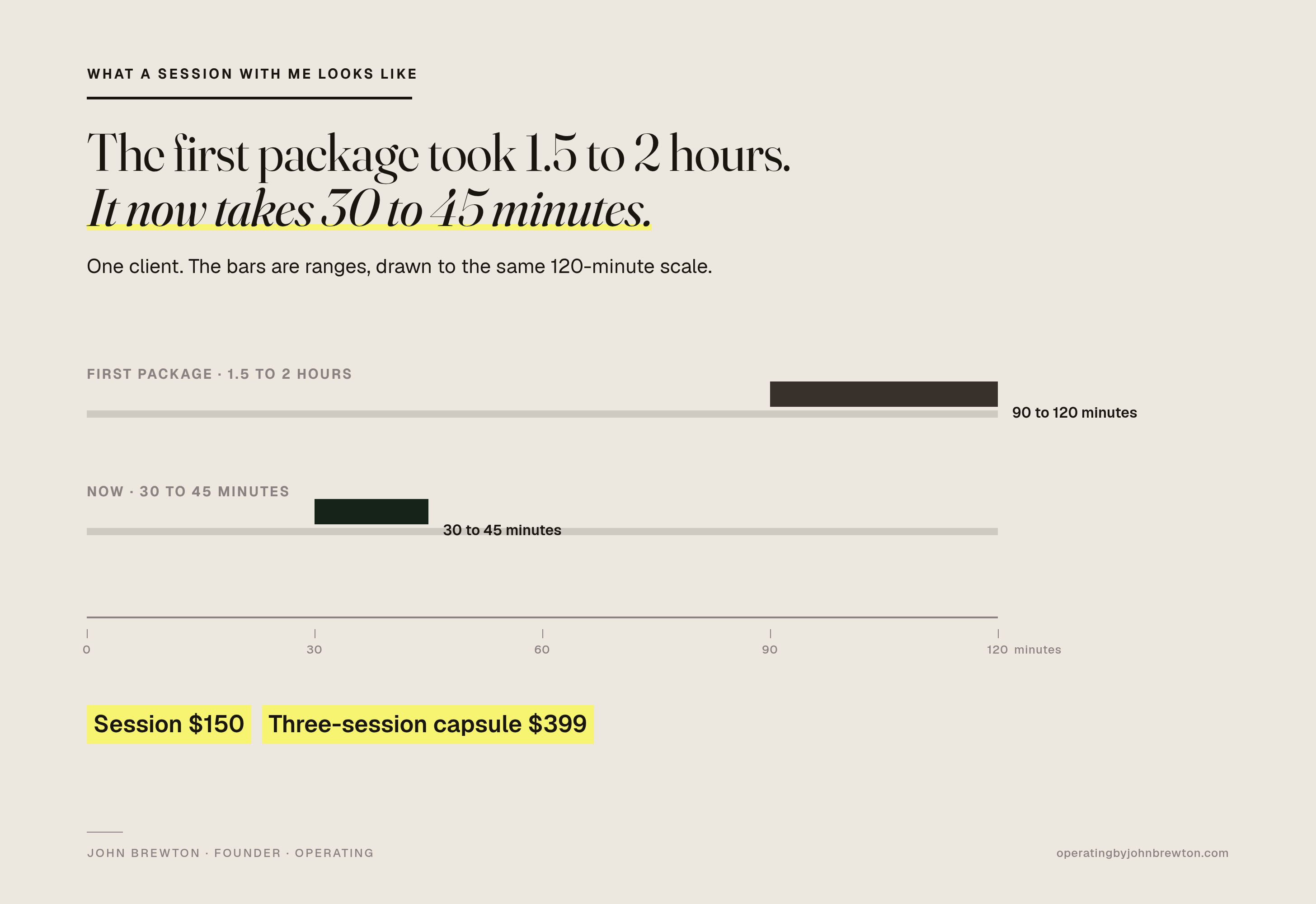
We pick one repeating piece of work and build a process around it. In the first hour we look at how that work runs today, where the time goes, and what a finished package has to contain. Then we start building the process so the next one is faster.
On a client project this fall, the first package took 1.5 to 2 hours to produce. Once the process was in place, the same kind of package takes 30 to 45 minutes. A person feeds the data and checks the result. The system does the work in between.
My first coaching offer this year was four hours for $99. More than 100 people bought it in 12 days, and I delivered over 400 hours. This weekend, one session is $150. A three-session capsule is three hours on one problem, for $399.
Book one session
Book the three-session capsule
How Three Different Operators Should Split One Operating Project
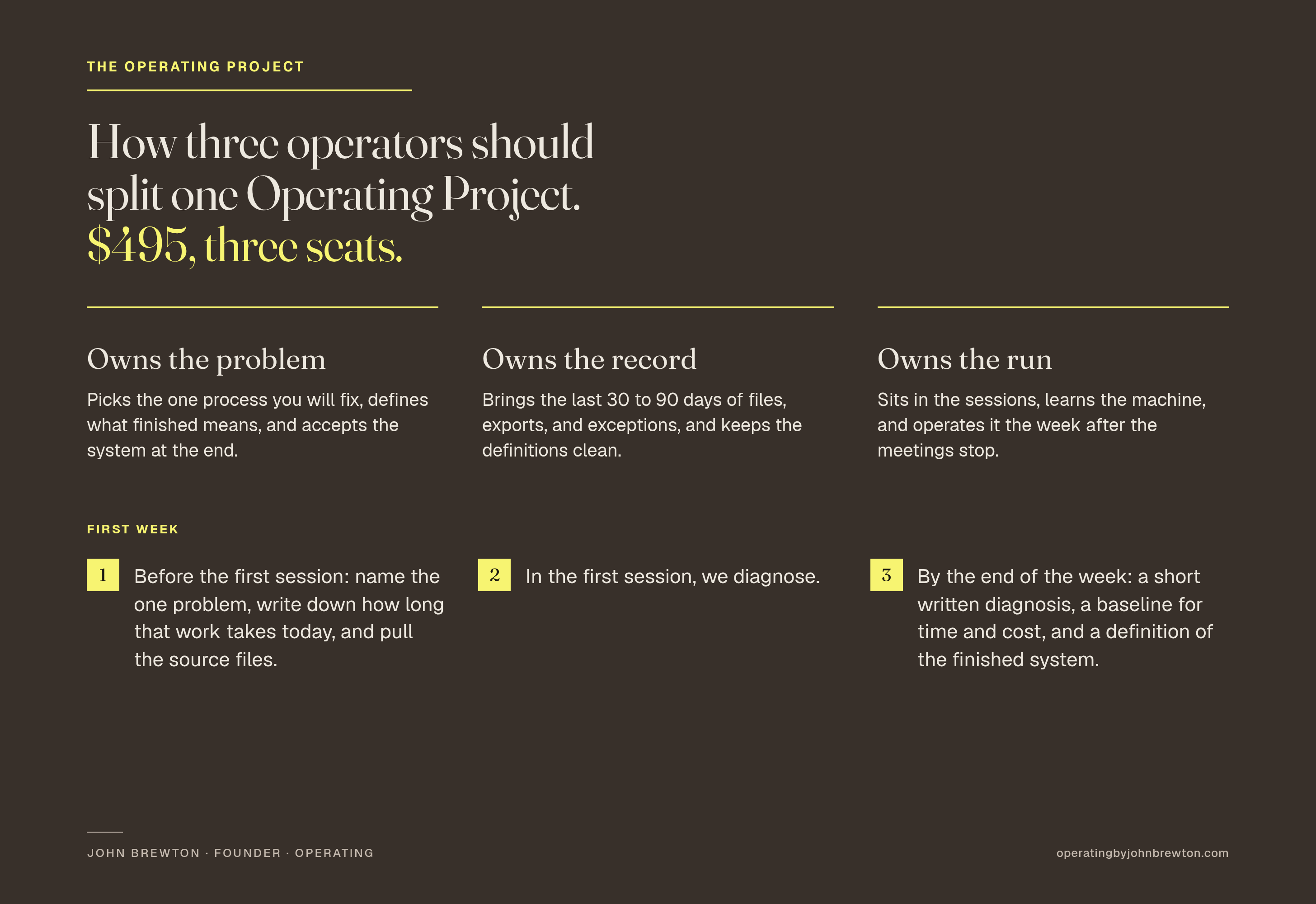
The Operating Project is four (probably 5 to 6) working sessions that take one business problem from diagnosis to a finished system, plus the machine that runs it. It’s normally $999 but until Monday I’m opening three seats for $495.
If three of you take one of those seats, split the work on purpose.
One person owns the problem: They pick the single process you will fix, they define what “finished” means, and they accept the system at the end.
One person owns the record: They bring the last 30 to 90 days of files, exports, and exceptions, and they keep the definitions clean so the new system is running on data you can trust.
One person owns the run: They sit in the sessions, they learn the machine, and they are the one who will operate it the week after we stop meeting.
A first-week plan that holds up is simple. Before the first session, name the one problem and write down how long that work takes today. Pull the source files. In the first session, we diagnose. By the end of the week, you should have a short written diagnosis, a baseline for time and cost, and a definition of the finished system. The later sessions build it and leave you with the machine that runs it. The thing you should be able to point to at the end is one finished system for that problem, plus the machine that keeps it running.
I wrote about the shape of the project here: The Operating Project
The Offers, Through Monday Night
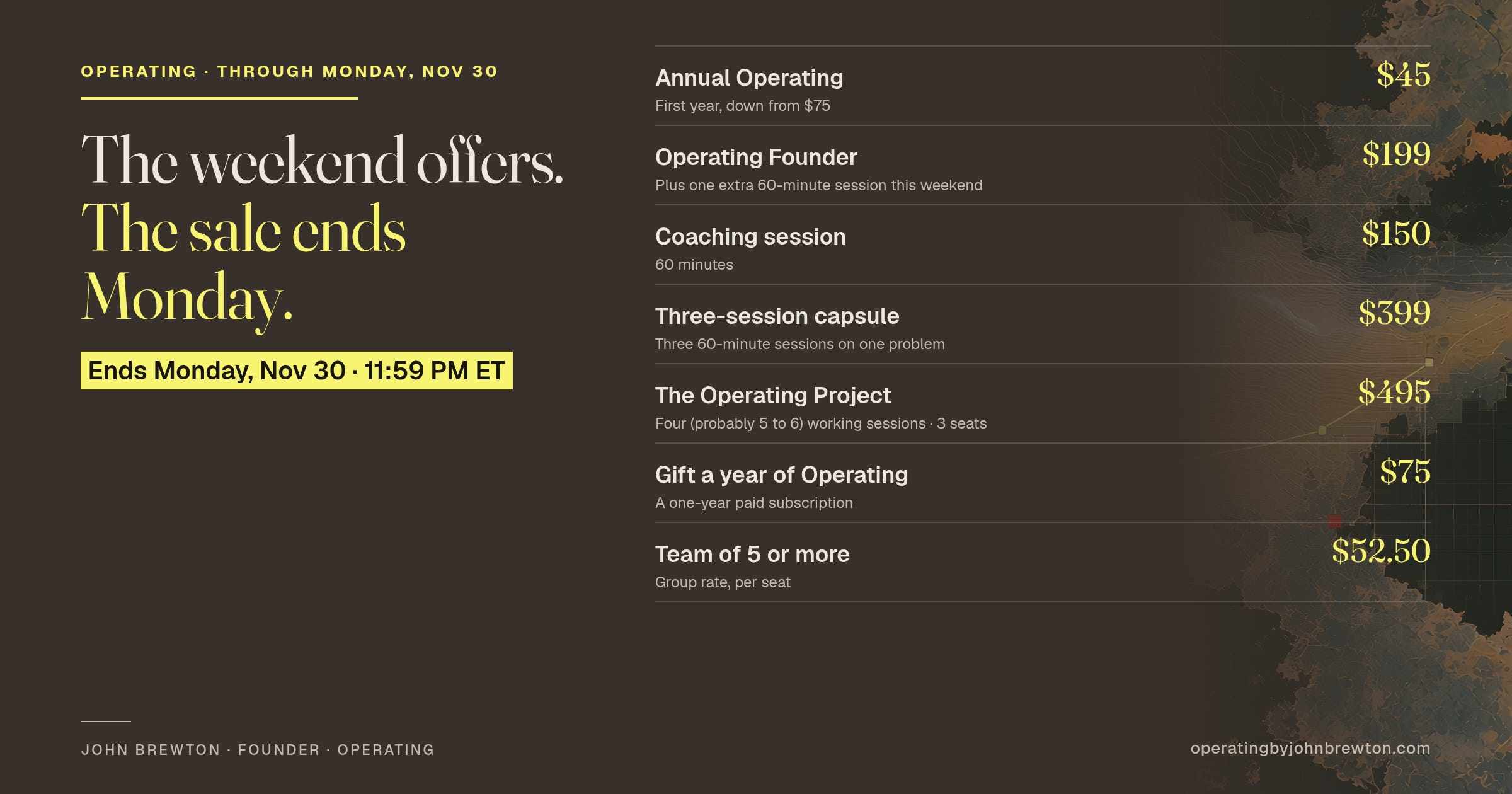
The full list, with the images and the checkout links, is on the sale post:
A Black Friday Weekend Sale on Operating
Annual subscription: $45 for the first year, down from $75.
Operating Founder: $199 a year, plus one extra 60-minute session if you join this weekend.
One 60-minute session: $150.
Three-session capsule: $399.
Book the three-session capsule
The Operating Project: $495, three seats.
A one-year gift is $75.
For a team of five or more, the group rate is $52.50 a seat. Reply to this email and I’ll set it up.
The sale ends Monday, Nov 30, at 11:59 PM ET. If you have questions about which one fits, be sure to drop me a message here on Substack.
- j -
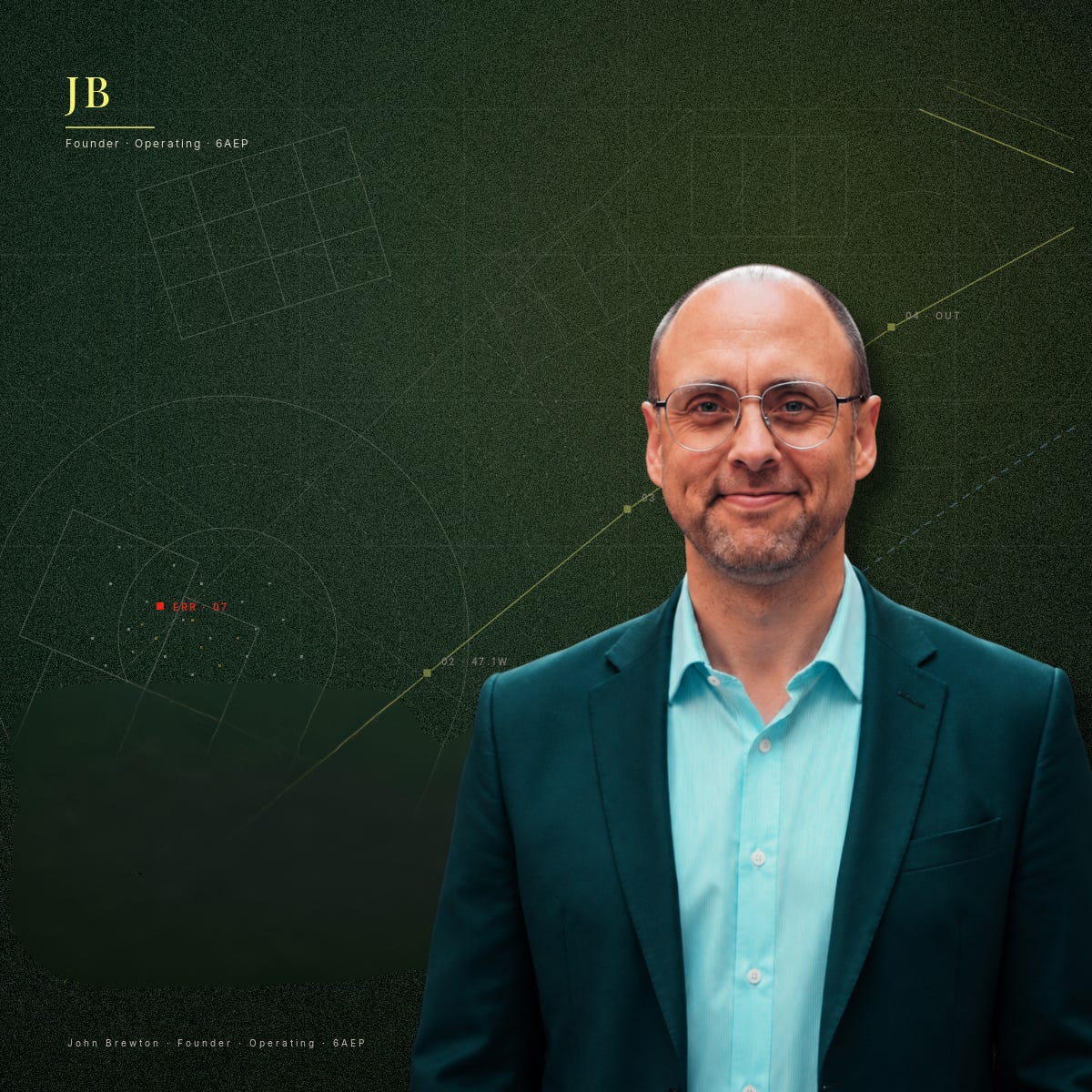
John Brewton documents the history and future of operating companies at Operating by John Brewton. He is a graduate of Harvard University and began his career as a PhD student in economics at the University of Chicago. Since selling his family’s B2B industrial distribution company in 2021, he has been helping business owners, founders, and investors optimize their operations.