Hello Operators!
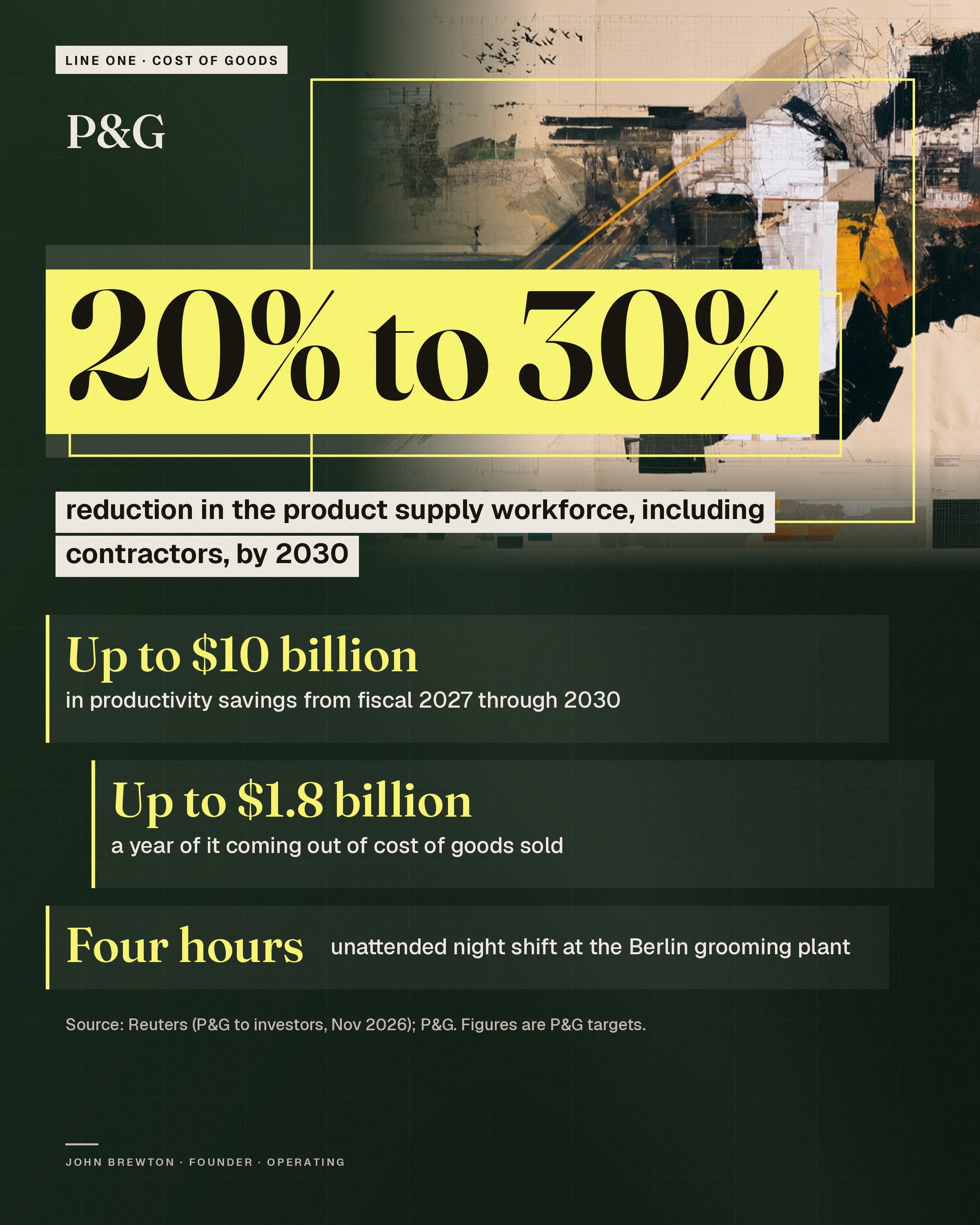
On Thursday, Procter & Gamble told investors it plans “a 20% to 30% reduction in our product supply workforce, including contractors, by 2030.” Luc Reynaert, who runs product supply, said this. CFO Andre Schulten set the target: Up to $10 billion in productivity savings from fiscal 2027 through 2030, with up to $1.8 billion a year coming from cost of goods sold.
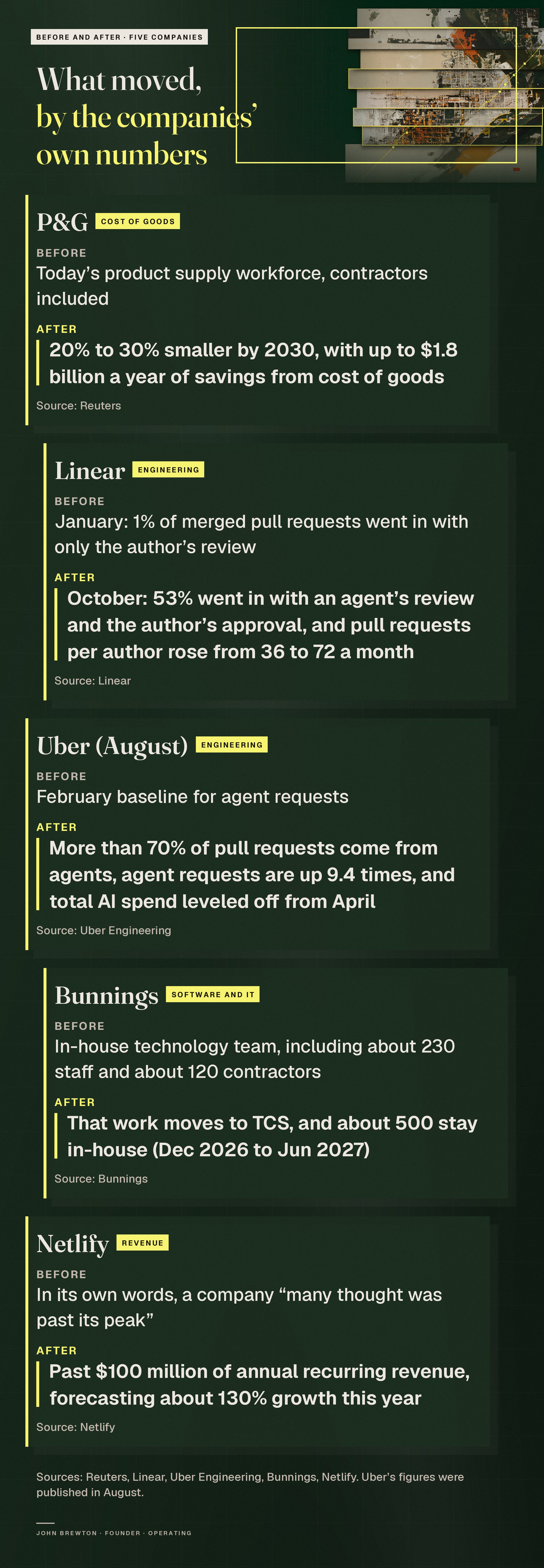
That was one company and one line of the income statement. The same week, a software company, a hardware retailer, and a cloud platform published numbers that move other lines, and Uber’s engineering team had already published its own in August. Read one at a time, they look like separate news stories. Put on one P&L, they add up to a different cost sheet.
I’m going to walk through the lines in order, from cost of goods down to compute, then cover the revenue side, because a cost story alone tells you half of what happened and what you need to know as Operators and business builders.
Line One: COGS
P&G is rebuilding its cost basis on purpose and saying so out loud. P&G describes it as analytics, AI and automation working together, and from what it has shown, most of it is automation. In October, P&G wrote that its grooming plant in Berlin, where it makes Gillette razors, had “achieved a four-hour unattended night shift,” and that product supply delivered $1.5 billion of savings last fiscal year, with more than $300 million of it reinvested.
So P&G is taking cost out of the factory floor and putting part of it back into the business, and it has published a plan for both halves.

How to Build an AI Operating Team in Grok Bot: The Field Manual
You Don’t Have a Software Problem. You Have a Database Problem.
The Quiet Builders Are Coming. Great Companies Will Build Around Them.
What a smaller operator takes from it: P&G didn’t start with a workforce number. It started with one shift in one plant running without people for four hours, then expanded the pilot. If you run a warehouse, a kitchen or a service desk, the first question is which four hours of your week could run unattended, and what it would take to prove it.
Walmart pointed the same way on Thursday. Its CFO, John David Rainey, listed “benefits in costs-to-serve from supply chain automation” among the reasons its US e-commerce business “once again achieved double-digit incremental margins.”